Hinduism
Kashi Vishwanath Temple
, India
About
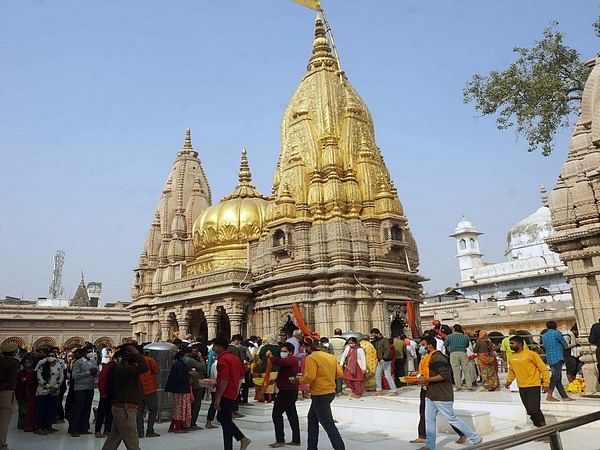
Set within the lanes of ancient Kashi, the Kashi Vishwanath Temple enshrines Shiva as Vishweshwara, Lord of the Universe. The deity rests upon a silver platform within the Garbha Griha, beyond a colonnaded Sabha Griha where pilgrims gather. Its three-tiered form rises through a tall spire, a gold dome, and a final golden pinnacle bearing a flag and a trident, gifts that have earned the shrine its popular name of the Golden Temple.
The temple sits within a wider circuit of the Panchkoshi, the sacred boundary of Varanasi, and is venerated as the foremost of the twelve self-manifested Jyotirlinga sites. Devotees believe the linga here is the very column of light by which Shiva revealed himself, and that bathing in the Ganga followed by darshan of Vishwanath opens a path toward moksha.
In 1780, Ahilyabai Holkar of Indore raised the present structure after centuries of repeated destruction and rebuilding under Ghurid, Sultanate, and Mughal rule. A tonne of gold gifted by Maharaja Ranjit Singh in 1835 plates the spire and three domes. The Kashi Vishwanath Dham corridor, opened in 2021, now links the sanctum to the ghats of the Ganga, recovering over forty buried shrines along the way.
History
The original Adi Vishveshwar Temple was razed by Ghurid armies in 1194 and rebuilt successively under the Delhi Sultanate, the Mughals through Raja Man Singh and Todar Mal in Akbar's reign, and finally by Vir Singh Deo under Jahangir. In 1669 Aurangzeb ordered its demolition, and the Gyanvapi Mosque arose on the site. The present temple, raised by the Maratha queen Ahilyabai Holkar in 1780, stands beside the older foundations and has since been adorned by donations from Sikh, Maratha, and Rajput houses across the subcontinent.
Significance
Hindus across the world hold a visit to Kashi Vishwanath as a once-in-a-lifetime aspiration, often paired with the temple at Rameswaram in the south to complete a great circle of devotion. The Jyotirlinga is understood as nirguna reality taking saguna form, and the worship of Vishwanath is said to release the devotee from samsara into the abode of Shiva on Mount Kailash.
Visiting
Engage with Kashi Vishwanath Temple
Through the four pathways
Seva सेवा — Service
Offer your time and skills here. The following opportunities are open at Kashi Vishwanath Temple:
No Seva offerings listed yet.
Sādhana साधना — Practice
Learn the worship and practice associated with Kashi Vishwanath Temple:
No Sādhana offerings listed yet.
Sandhāna सन्धान — Wisdom
Unite with the wisdom of this tradition:
No Sandhāna offerings listed yet.
Sādhya साध्य — Giving
Support this sacred place according to your means:
No Sādhya offerings listed yet.
All giving flows directly to Kashi Vishwanath Temple. Mandala does not take a commission.
Related sacred places
.JPG%2F1280px-A_a_b_c_d_e_(13).JPG&w=3840&q=75) Hinduism
HinduismAmarnath Temple
, India
A high Himalayan cave shrine in Jammu and Kashmir where a naturally forming ice lingam is venerated as Lord Śiva, drawing one of India's great seasonal pilgrimages.
temple
 Hinduism
Badami cave temples
, India
A celebrated complex of sixth- to eighth-century Hindu, Jain, and (likely) Buddhist cave temples carved into the red sandstone cliffs of Badami in northern Karnataka, India.
temple
 Hinduism
Badrinath Temple
, India
A major Himalayan Vaiṣṇava pilgrimage temple in Uttarakhand, India — one of the four Char Dham and one of the 108 Divya Desams sacred to the worship of Lord Vishnu.
temple
 Hinduism
BAPS Shri Swaminarayan Mandir London
, United Kingdom
A traditional Swaminarayan Hindu mandir in Neasden, north-west London — celebrated as the first authentically built Hindu stone temple in Britain and in Europe.
temple
 Hinduism
Besakih
, Indonesia
Bali's principal Hindu sanctuary — the 'Mother Temple' (Pura Besakih) — set high on the slopes of the sacred volcano Gunung Agung in eastern Bali, Indonesia.
temple
 Hinduism
Bhimashankar Temple
, India
A revered Śiva temple in the forested Sahyadri hills of Maharashtra, India, enshrining one of the twelve Jyotirliṅgas and standing close to the source of the Bhīmā River.
temple