Hinduism
Sita Samahit Sthal
, India
About
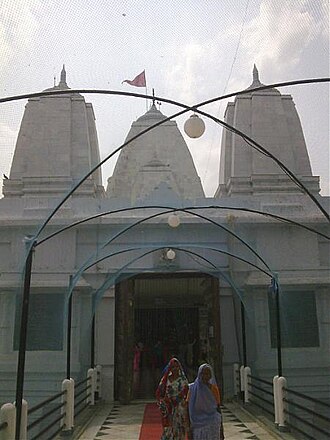
Sita Samahit Sthal, also known simply as Sitamarhi, rests between the holy cities of Prayagraj and Varanasi in Uttar Pradesh, near National Highway 2 and reached from the railway station at Jangiganj. It has long been one of the cherished pilgrim destinations of the eastern, or Poorvanchal, stretch of the state.
The sanctity of the place rests upon a tender episode at the close of the Ramayana. Tradition holds that after years of dwelling in the forest hermitage of the sage Valmiki, who composed the great epic, Mata Sita came to this very ground and asked her mother, the earth, to receive her once more into her embrace. The earth opened, and Sita returned to it in dignity, leaving behind her twin sons Lava and Kusha to be reclaimed by their father, Sri Rama.
The legend joins this site to the Ashvamedha yajna performed by Sri Rama after his return to Ayodhya. As the sacrificial horse roamed the kingdoms it came into the forest near present-day Baripur in Bhadohi, where Lava and Kusha, raised in Valmiki's hermitage, halted it. In the great battle that followed they overcame Lakshmana, Bharata, Shatrughna and even bound the mighty Hanuman, until Sri Rama arrived and the family was reunited.
The temple precinct preserves the memory of that meeting and parting, and the site is visited by devotees who come to honour Mata Sita and her sons within the very forest in which the epic itself was first composed.
Significance
Sita Samahit Sthal occupies a singular place in the geography of Ramayana devotion, marking what tradition remembers as Sita's final act of returning to the earth. The site weaves together her residence in Valmiki's ashram, the upbringing of Lava and Kusha and the closing reunion with Sri Rama, drawing pilgrims from across the Hindi-speaking heartland to a quiet stretch of Uttar Pradesh held holy by long memory.
Visiting
Engage with Sita Samahit Sthal
Through the four pathways
Seva सेवा — Service
Offer your time and skills here. The following opportunities are open at Sita Samahit Sthal:
No Seva offerings listed yet.
Sādhana साधना — Practice
Learn the worship and practice associated with Sita Samahit Sthal:
No Sādhana offerings listed yet.
Sandhāna सन्धान — Wisdom
Unite with the wisdom of this tradition:
No Sandhāna offerings listed yet.
Sādhya साध्य — Giving
Support this sacred place according to your means:
No Sādhya offerings listed yet.
All giving flows directly to Sita Samahit Sthal. Mandala does not take a commission.
Related sacred places
.JPG%2F1280px-A_a_b_c_d_e_(13).JPG&w=3840&q=75) Hinduism
HinduismAmarnath Temple
, India
A high Himalayan cave shrine in Jammu and Kashmir where a naturally forming ice lingam is venerated as Lord Śiva, drawing one of India's great seasonal pilgrimages.
temple
 Hinduism
Badami cave temples
, India
A celebrated complex of sixth- to eighth-century Hindu, Jain, and (likely) Buddhist cave temples carved into the red sandstone cliffs of Badami in northern Karnataka, India.
temple
 Hinduism
Badrinath Temple
, India
A major Himalayan Vaiṣṇava pilgrimage temple in Uttarakhand, India — one of the four Char Dham and one of the 108 Divya Desams sacred to the worship of Lord Vishnu.
temple
 Hinduism
BAPS Shri Swaminarayan Mandir London
, United Kingdom
A traditional Swaminarayan Hindu mandir in Neasden, north-west London — celebrated as the first authentically built Hindu stone temple in Britain and in Europe.
temple
 Hinduism
Besakih
, Indonesia
Bali's principal Hindu sanctuary — the 'Mother Temple' (Pura Besakih) — set high on the slopes of the sacred volcano Gunung Agung in eastern Bali, Indonesia.
temple
 Hinduism
Bhimashankar Temple
, India
A revered Śiva temple in the forested Sahyadri hills of Maharashtra, India, enshrining one of the twelve Jyotirliṅgas and standing close to the source of the Bhīmā River.
temple