Buddhism
Wat Yansangwararam
, Thailand
About
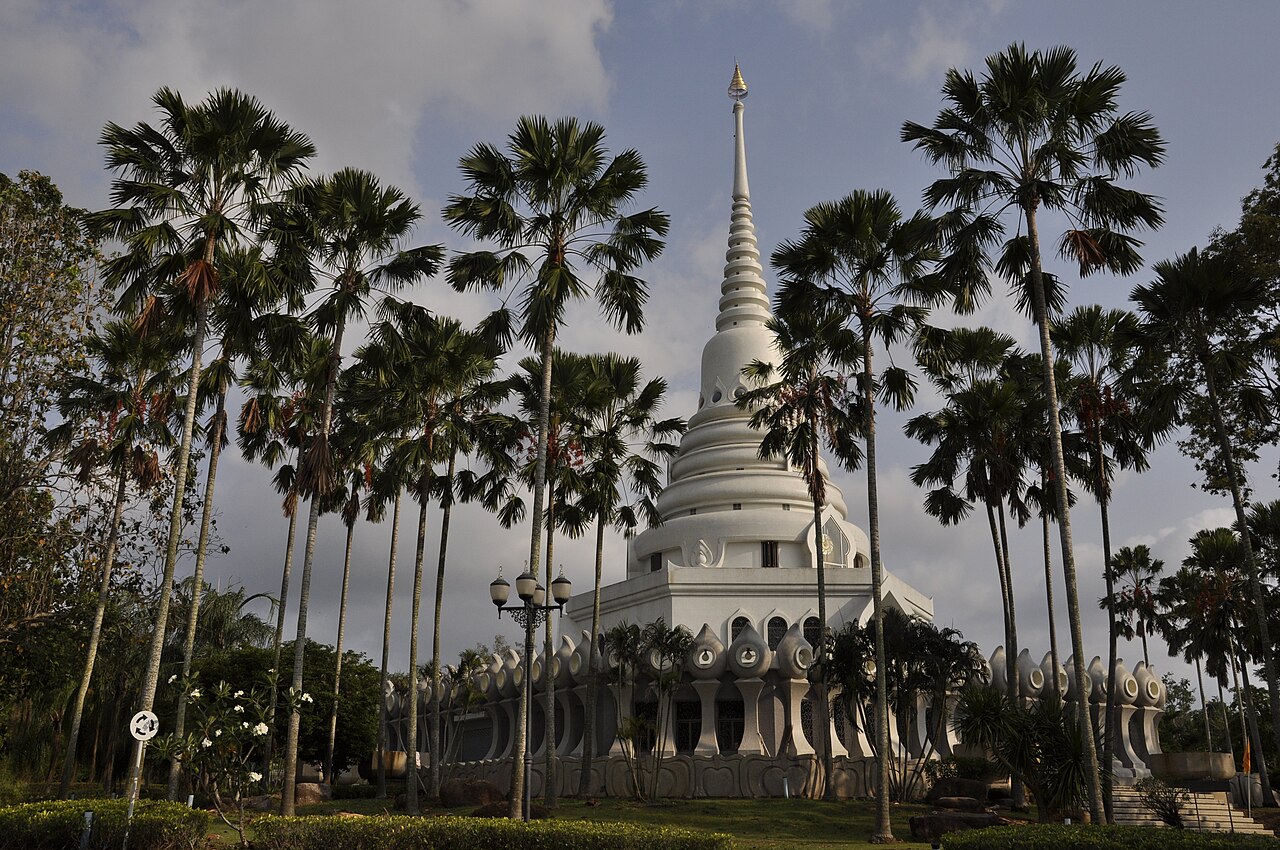
Wat Yansangwararam Woramahawihan — Wat Yan — lies in Huai Yai in Chonburi Province, set among gardens and reflecting lakes about twenty kilometres southeast of Pattaya. The monastery is held under the patronage of King Bhumibol Adulyadej, and most of its buildings stand as devotional tributes to members of the Thai royal house. Among its principal landmarks is a faithful replica of the Mahabodhi Temple at Bodh Gaya.
The monastery was founded in 1976 by Somdet Phra Nyanasamvara, the nineteenth Supreme Patriarch of the Thai Sangha, as a centre dedicated to dharma practice with particular emphasis on samatha and vipassana meditation. It remains an important institution of the Dhammayuttika Nikaya in Thailand. The original land was donated by Dr Kajorn and Khun Ying Nithiwadee Ontrakarn.
The complex is laid out in four functional zones: the Buddhavas at its devotional heart; the Sanghavas, where the monastic community resides; the Karavas, which welcomes lay practitioners undertaking vipassana practice; and a section devoted to agricultural education and wildlife care.
Within the precinct stand chedis, ordination halls, scripture libraries, and pavilions raised in honour of monarchs — among them Naresuan, Taksin, Queen Sirikit, the Princess Mother Srinagarindra, and Prince Mahidol. International pavilions arranged around the lakeside reservoir, in Lanna, Isan, Chinese, Japanese, Indian, and Western styles, were erected in 2021 in honour of King Bhumibol's fifth-cycle birthday.
History
The monastery was founded in 1976 by Somdet Phra Nyanasamvara, the 19th Supreme Patriarch of the Thai Sangha, as a centre for samatha and vipassana practice within the Dhammayuttika Nikaya. The initial donation of land of around sixteen hectares came from Dr Kajorn and Khun Ying Nithiwadee Ontrakarn, with subsequent acquisitions extending the precinct to nearly fifty-nine hectares.
Most of the major buildings — the chedi of the Chakri dynasty, the scripture hall, the ordination hall raised in tribute to King Taksin the Great, the replica of the Bodh Gaya stupa, and the Phra Maha Mondop honouring King Bhumibol and Queen Sirikit — were raised as devotional works dedicated to specific members of the royal house or in commemoration of significant royal occasions.
Visiting
Engage with Wat Yansangwararam
Through the four pathways
Seva सेवा — Service
Offer your time and skills here. The following opportunities are open at Wat Yansangwararam:
No Seva offerings listed yet.
Sādhana साधना — Practice
Learn the worship and practice associated with Wat Yansangwararam:
No Sādhana offerings listed yet.
Sandhāna सन्धान — Wisdom
Unite with the wisdom of this tradition:
No Sandhāna offerings listed yet.
Sādhya साध्य — Giving
Support this sacred place according to your means:
No Sādhya offerings listed yet.
All giving flows directly to Wat Yansangwararam. Mandala does not take a commission.
Related sacred places
 Buddhism
Pagoda of Chengtian Temple
, People's Republic of China
An eleven-storeyed brick pagoda in Yinchuan, Ningxia, China, built on the site of a Western Xia Buddhist temple and standing as the tallest pagoda in the region.
monastery
 Buddhism
Pagoda of Cishou Temple
, People's Republic of China
A sixteenth-century stone and brick Chinese pagoda in the Buddhist Cishou Temple at Balizhuang, Haidian District, Beijing, originally named the Yong'an Wanshou Pagoda.
monastery
 Buddhism
Songyue Pagoda
, People's Republic of China
The oldest surviving brick pagoda in China, built in 523 CE on Mount Song in Henan and inscribed on the UNESCO World Heritage List as part of the Historic Monuments of Dengfeng.
monastery
 Buddhism
Wanbu Huayanjing Pagoda
, People's Republic of China
The eleventh-century Liao-era White Pagoda of Hohhot in Inner Mongolia, an octagonal seven-storey brick tower built to enshrine ten thousand copies of the Avatamsaka Sutra.
monastery
_%25E0%25B8%25A7%25E0%25B8%25B1%25E0%25B8%2594%25E0%25B8%25AD%25E0%25B8%25A3%25E0%25B8%25B1%25E0%25B8%258D%25E0%25B8%258D%25E0%25B8%25B4%25E0%25B8%2581_%25E0%25B8%259E%25E0%25B8%25B4%25E0%25B8%25A9%25E0%25B8%2593%25E0%25B8%25B8%25E0%25B9%2582%25E0%25B8%25A5%25E0%25B8%2581_-_IMG_01.jpg%2F1280px-Wat_Aranyik_Phitsanulok_(March_2022)_%25E0%25B8%25A7%25E0%25B8%25B1%25E0%25B8%2594%25E0%25B8%25AD%25E0%25B8%25A3%25E0%25B8%25B1%25E0%25B8%258D%25E0%25B8%258D%25E0%25B8%25B4%25E0%25B8%2581_%25E0%25B8%259E%25E0%25B8%25B4%25E0%25B8%25A9%25E0%25B8%2593%25E0%25B8%25B8%25E0%25B9%2582%25E0%25B8%25A5%25E0%25B8%2581_-_IMG_01.jpg&w=3840&q=75) Buddhism
BuddhismWat Aranyik
, Thailand
A historic Theravada Buddhist temple in Phitsanulok, northern Thailand, whose name evokes the ancient forest-dwelling tradition of Thai monastic practice.
monastery
_%25E0%25B8%25A7%25E0%25B8%25B1%25E0%25B8%2594%25E0%25B9%2580%25E0%25B8%259A%25E0%25B8%258D%25E0%25B8%2588%25E0%25B8%25A1%25E0%25B8%259A%25E0%25B8%259E%25E0%25B8%25B4%25E0%25B8%2595%25E0%25B8%25A3%25E0%25B8%2594%25E0%25B8%25B8%25E0%25B8%25AA%25E0%25B8%25B4%25E0%25B8%2595%25E0%25B8%25A7%25E0%25B8%2599%25E0%25B8%25B2%25E0%25B8%25A3%25E0%25B8%25B2%25E0%25B8%25A1%25E0%25B8%25A3%25E0%25B8%25B2%25E0%25B8%258A%25E0%25B8%25A7%25E0%25B8%25A3%25E0%25B8%25A7%25E0%25B8%25B4%25E0%25B8%25AB%25E0%25B8%25B2%25E0%25B8%25A3_%25E0%25B9%2580%25E0%25B8%2582%25E0%25B8%2595%25E0%25B8%2594%25E0%25B8%25B8%25E0%25B8%25AA%25E0%25B8%25B4%25E0%25B8%2595_%25E0%25B8%2581%25E0%25B8%25A3%25E0%25B8%25B8%25E0%25B8%2587%25E0%25B9%2580%25E0%25B8%2597%25E0%25B8%259E%25E0%25B8%25A1%25E0%25B8%25AB%25E0%25B8%25B2%25E0%25B8%2599%25E0%25B8%2584%25E0%25B8%25A3_(3).jpg%2F1280px-thumbnail.jpg&w=3840&q=75) Buddhism
BuddhismWat Benchamabophit
, Thailand
A royal Buddhist wat in Bangkok's Dusit District, beloved as the Marble Temple for its gleaming Italian-stone façade and refined late-nineteenth-century craftsmanship.
monastery