
Islam
Abu'l-Fida Mosque
, Syria
About
Set along the banks of the Orontes in the city of Hama, the Abu'l-Fida Mosque (Jāmiʿ Abū'l-Fidāʾ) is a layered work of medieval Syrian Islamic architecture, combining a mausoleum and a congregational mosque within one walled enclosure.
The mausoleum at the heart of the complex was raised in 1327 CE by al-Mu'ayyid Isma'il during the Ayyubid era, built of pale limestone and crowned by a domed brick roof. Its attached minaret was constructed in contrasting bands of limestone and black basalt, and both structures still stand close to their original form.
The mosque itself, lying to the south of the central sahn (courtyard), is largely Mamluk-era work. Its haram faces the river, and the windows of the south façade are framed by carved pillars depicting intertwined serpents — a detail that has earned the building the affectionate local name Jāmiʿ al-Hayyāt, the Mosque of the Serpents.
Two of the original four gates of the complex survive; the northern one, dating to the Ayyubid period, opens into the courtyard and the resting place of al-Mu'ayyid.
History
The mausoleum portion of the complex was completed in 1327 CE under the Ayyubid prince al-Mu'ayyid Isma'il. The congregational mosque that adjoins it was built later, during the Mamluk period, and the bulk of its surviving fabric belongs to that era. A walled garden once stood beside the complex, and four monumental gates originally framed the precinct, of which two remain.
Significance
Locally remembered as the Mosque of the Serpents (Jāmiʿ al-Hayyāt) for the carved serpent pillars at its windows, the building remains an important Friday mosque in Hama and a tangible link to the Ayyubid and Mamluk patronage that shaped the religious landscape of medieval Syria.
Visiting
Engage with Abu'l-Fida Mosque
Through the four pathways
Seva सेवा — Service
Offer your time and skills here. The following opportunities are open at Abu'l-Fida Mosque:
No Seva offerings listed yet.
Sādhana साधना — Practice
Learn the worship and practice associated with Abu'l-Fida Mosque:
No Sādhana offerings listed yet.
Sandhāna सन्धान — Wisdom
Unite with the wisdom of this tradition:
No Sandhāna offerings listed yet.
Sādhya साध्य — Giving
Support this sacred place according to your means:
No Sādhya offerings listed yet.
All giving flows directly to Abu'l-Fida Mosque. Mandala does not take a commission.
Related sacred places
_(14593689400).jpg%2F1280px-By_Nile_and_Tigris_-_a_narrative_of_Journeys_in_Egypt_and_Mesopotamia_on_behalf_of_the_British_Museum_between_the_years_1886_and_1913_(1920)_(14593689400).jpg&w=3840&q=75) Islam
IslamAl-Kadhimiya Mosque
, Iraq
One of the foremost Twelver Shia shrines, set in the Kāẓimiya district of Baghdad, Iraq, sheltering the tombs of the seventh and ninth Imams as well as great Shia scholars of the medieval era.
mosque
 Islam
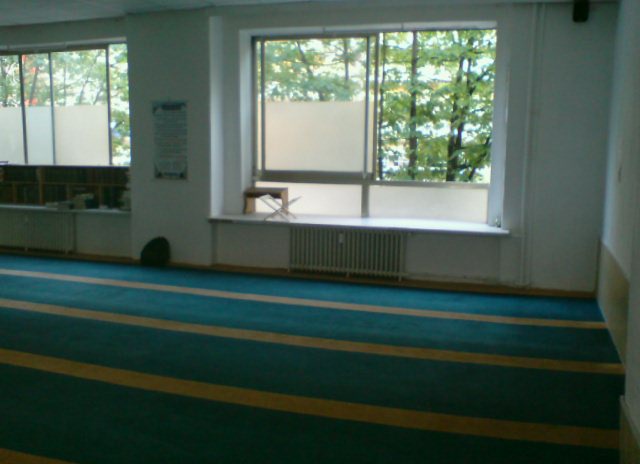
IslamAl-Quds Mosque Hamburg
, Germany
A former Sunni Muslim mosque in the German port city of Hamburg, which served local worshippers from 1993 until its closure was ordered by German security authorities in 2010.
mosque
 Islam
IslamBasharat Mosque
, Spain
The principal Ahmadiyya mosque of Spain, built at Pedro Abad near Córdoba and inaugurated in 1982 as the centre of the Ahmadiyya community in the country.
mosque
.jpg%2F1280px-Bayezid_I_Mosque_-_Y%25C4%25B1ld%25C4%25B1r%25C4%25B1m_Camii_(1).jpg&w=3840&q=75) Islam
IslamBayezid I Mosque
, Turkey
An early Ottoman congregational mosque in Bursa, Turkey, raised between 1391 and 1395 as the centrepiece of the great külliye complex of Sultan Bayezid I, called 'Yıldırım' — the Thunderbolt.
mosque
 Islam
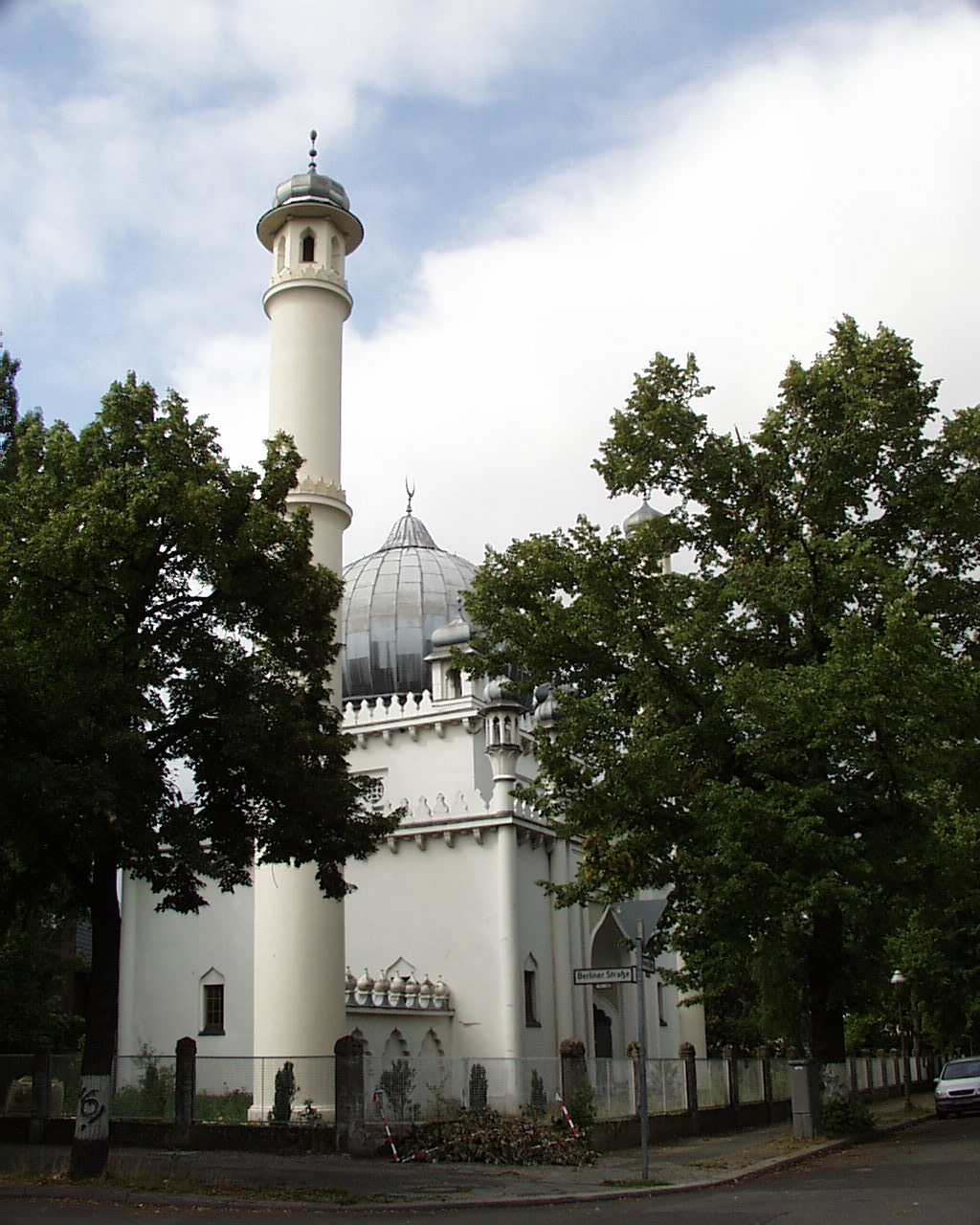
IslamBerlin Mosque
, Germany
The oldest surviving mosque in Germany, built in Berlin's Wilmersdorf district in the 1920s in a Neo-Mughal style and administered by the Lahore Ahmadiyya Movement.
mosque
 Islam
IslamBlue Mosque
, Afghanistan
The Blue Mosque of Mazar-i-Sharif — the Shrine of Hazrat Ali — a turquoise-tiled mosque and mausoleum revered across Afghanistan as one of the holiest sites in the country.
mosque