_01.jpg%2F1280px-Chin_Swee_Caves_Temple_(230918)_01.jpg&w=3840&q=75)
Taoism
Chin Swee Caves Temple
, Malaysia
About
The Chin Swee Caves Temple (清水岩庙, Qīngshuǐ Yán Miào) stands on a steep, forested 28-acre site in the Genting Highlands of Pahang, Malaysia. At about 1,400 metres above sea level, it lies only a few minutes' drive below the resort city at the peak, its tiered red roofs framed by virgin highland forest and views over the winding road that climbs the mountain.
The temple is consecrated to Master Qingshui (Reverend Chin Swee), a Buddhist monk of Fujian Province in China who has long been honoured among the people of Anxi as a deity. He is remembered for his compassionate works and for the miraculous abilities tradition attributes to him — among them the power to summon rain and to subdue malevolent spirits. The temple draws devotees from across Southeast Asia and beyond — from Singapore, Taiwan, Vietnam, China, Thailand, and Indonesia.
The site combines a traditional Chinese sanctuary with Buddhist elements: a vast Buddha statue rises behind the temple, and the main hall holds the seated image of Master Qingshui, placed in the northern part of the hall facing south in accordance with feng shui. Behind the statue, a natural rock and an artificial flowing stream supply year-round mineral water known locally as 'Dragon Mineral Water'. Some 10,000 blessing lamps were originally installed; around 2,000 remain today.
History
After completing the Genting Highlands Resort in 1975, the late Lim Goh Tong — founder of the Genting Group — turned to a long-cherished personal project: a temple in honour of Master Qingshui, the patron saint of his ancestral village of Penglai in Anxi, Fujian. He gathered friends and clansmen and formed the Chin Swee Temple Society, donating the 28-acre plot himself; a sum of RM 8.1 million was contributed to the building fund by his companies Resorts World Bhd and Genting Berhad. Construction began on terrain so steep that modern machinery could not be used, and foundation holes of 80 to 100 feet had to be excavated by hand. Lim Goh Tong served as planner, architect, designer, contractor, and supervisor; the temple was eighteen years in the making, and no work-related fatalities were reported throughout. It was officially opened on 29 March 1994 by the then Minister of Transport, Ling Liong Sik.
Visiting
Engage with Chin Swee Caves Temple
Through the four pathways
Seva सेवा — Service
Offer your time and skills here. The following opportunities are open at Chin Swee Caves Temple:
No Seva offerings listed yet.
Sādhana साधना — Practice
Learn the worship and practice associated with Chin Swee Caves Temple:
No Sādhana offerings listed yet.
Sandhāna सन्धान — Wisdom
Unite with the wisdom of this tradition:
No Sandhāna offerings listed yet.
Sādhya साध्य — Giving
Support this sacred place according to your means:
No Sādhya offerings listed yet.
All giving flows directly to Chin Swee Caves Temple. Mandala does not take a commission.
Related sacred places
.jpg%2F1280px-11.27_%25E7%25B8%25BD%25E7%25B5%25B1%25E5%2587%25BA%25E5%25B8%25AD%25E3%2580%258C%25E9%25BE%258D%25E5%25B1%25B1%25E5%25AF%25BA%25E5%25BB%25BA%25E5%25AF%25BA280%25E5%2591%25A8%25E5%25B9%25B4%25E7%25B4%2580%25E5%25BF%25B5%25E3%2580%258D_(49131075286).jpg&w=3840&q=75) Taoism
TaoismBangka Lungshan Temple
, Taiwan
A historic Taiwanese folk temple in Taipei's Wanhua District, founded by Fujianese settlers in 1738 and dedicated above all to the bodhisattva Guanyin.
temple
.jpg%2F1280px-Cebu_Food_Trip_(11051398174).jpg&w=3840&q=75) Taoism
TaoismCebu Taoist Temple
, Philippines
A multi-tiered Taoist temple in the Beverly Hills district of Cebu City, the Philippines — built in 1972 by the local Chinese Filipino community as a centre of Dao worship.
temple
.jpg%2F1280px-Che_Kung_Temple_(Shatin%2C_Hong_Kong).jpg&w=3840&q=75) Taoism
TaoismChe Kung Miu
, People's Republic of China
A temple in Tai Wai, Sha Tin, Hong Kong, dedicated to Che Kung — a Southern Song dynasty general honoured as a protective deity in Chinese folk religion.
temple
 Taoism
Grand Temple of Mount Heng
, People's Republic of China
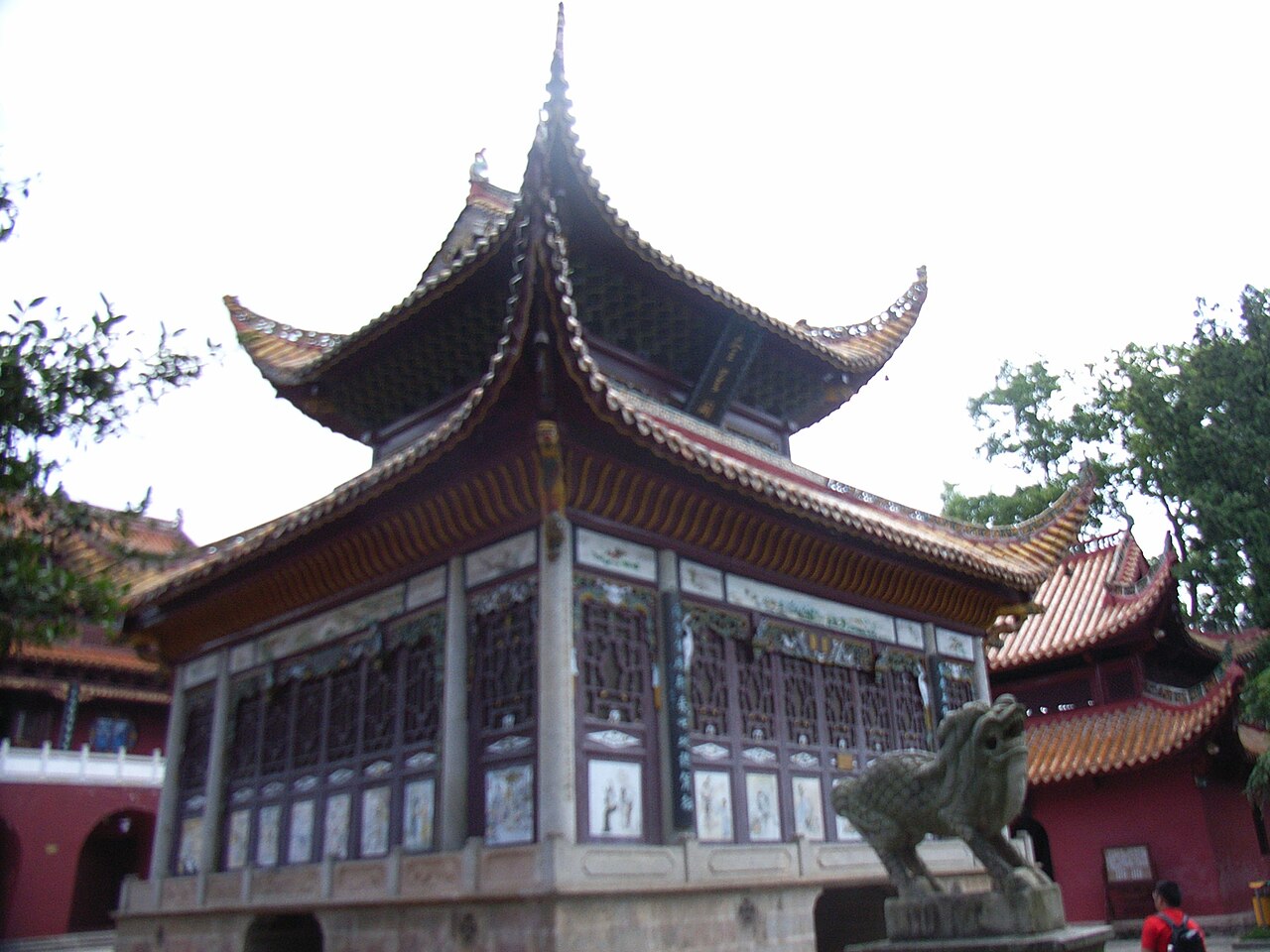
The Grand Temple of Mount Heng (Nanyue Damiao) stands at the foot of Mount Heng in Hunan, China, the largest temple complex on this sacred southern mountain and a long-standing centre of Taoist, Buddhist, and Confucian devotion.
temple
 Taoism
Louguantai
, People's Republic of China
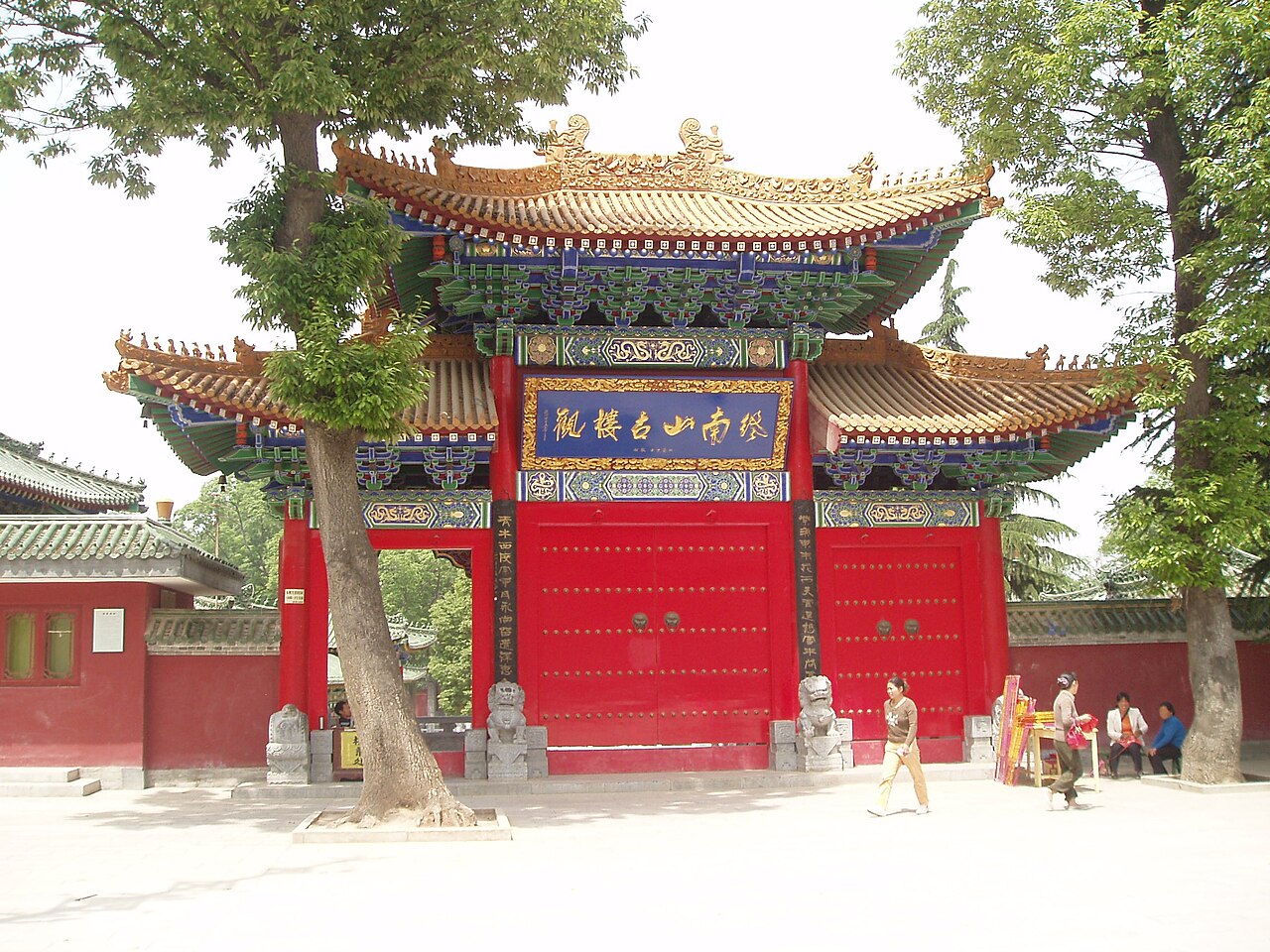
A Taoist temple in Tayu village in Zhouzhi county of Shaanxi province, China, traditionally honoured as the very place where Laozi composed the Tao Te Ching.
temple
 Taoism
Snake Temple
, Malaysia
A Chinese folk-Buddhist temple in Penang, Malaysia, dedicated to the deified monk Chor Soo Kong and home to a community of resident pit vipers regarded as his disciples.
temple