
Shinto
Omura Shrine
, Japan
About
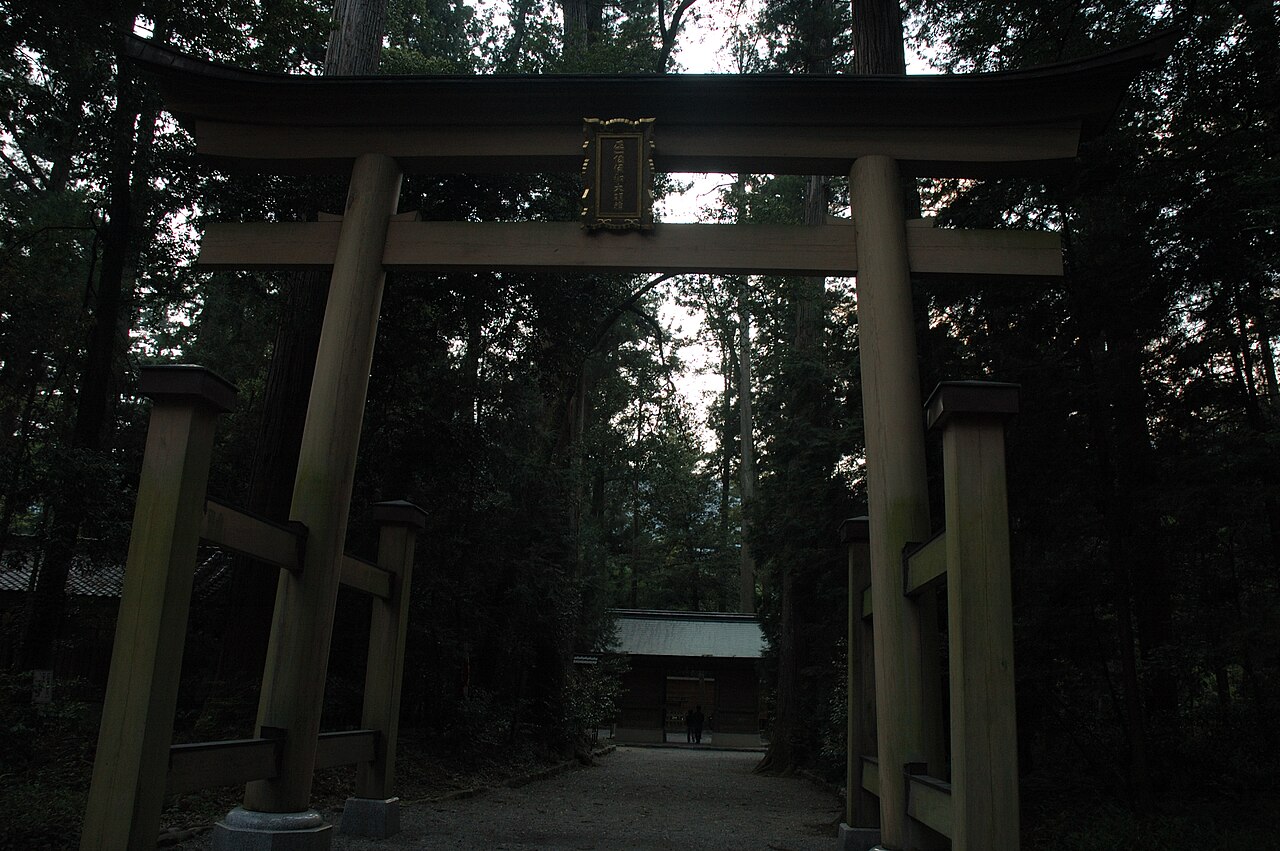
Omura Jinja stands quietly in the village of Hidaka in the Takaoka District of Kochi Prefecture on Shikoku. The shrine traces its founding to 587, though the present shaden, the main building, dates to 1705. Behind the main hall rises the Botansugi, a Japanese cedar designated a natural monument and held to be a thousand years old, whose canopy is said in legend to shine in times of crisis, earning the further name Tomyo-sugi or eternal flame cedar.
The shintai, the object in which the kami is felt to dwell, is a sword: the National Treasure kondoso kanto tachi goshirae, a gilt bronze tachi with a ring pommel offered to Kunitokotachi by the Kusakabe clan at the time of the shrine's founding. The straight, double-edged blade dates to the late Kofun period and is said to be the oldest Japanese object passed down from generation to generation. It is brought out for public veneration once a year, at the grand festival on 15 November.
Among its other treasures the shrine preserves two late Heian wooden masks of Bodhisattvas designated as Important Cultural Properties, two mirrors with a Horai design honoured as prefectural cultural properties, a piece of Sue ware, two bronze hoko, a vertical painting attributed to Ono no Michikaze, and a munafuda ridge tag from 1240. Nine painted hengaku votive plaques of the Thirty-Six Poets and a tanzaku with waka by Emperor Go-Nara are also kept here.
Significance
As the keeper of one of the oldest surviving Japanese ritual swords, Omura Jinja occupies a particular place in the long lineage of Shinto shrines that hold weapons as shintai, the seat of the kami. The Botansugi cedar behind the sanctuary continues the older Shinto reverence for sacred trees as dwelling places of unseen presence.
Visiting
Engage with Omura Shrine
Through the four pathways
Seva सेवा — Service
Offer your time and skills here. The following opportunities are open at Omura Shrine:
No Seva offerings listed yet.
Sādhana साधना — Practice
Learn the worship and practice associated with Omura Shrine:
No Sādhana offerings listed yet.
Sandhāna सन्धान — Wisdom
Unite with the wisdom of this tradition:
No Sandhāna offerings listed yet.
Sādhya साध्य — Giving
Support this sacred place according to your means:
No Sādhya offerings listed yet.
All giving flows directly to Omura Shrine. Mandala does not take a commission.
Gallery
Related sacred places
 Shinto
Hiraoka Shrine
, Japan
Hiraoka Jinja in Higashiosaka, Osaka Prefecture, is the Ichinomiya, the foremost shrine, of the former Kawachi Province, and the ancestral Shinto sanctuary from which two of the kami of Kasuga Taisha were enshrined.
shrine
 Shinto
Hiroshima Gokoku Shrine
, Japan
Hiroshima Gokoku Jinja, set within the grounds of Hiroshima Castle, is a Shinto shrine dedicated to the spirits of the Hiroshima war dead, rebuilt by the citizens of the city after its destruction in the atomic bombing.
shrine
 Shinto
Iwa Shrine
, Japan
Iwa Jinja in the Ichinomiya district of Shiso city, Hyogo Prefecture, is the Ichinomiya, the foremost shrine, of the former Harima Province, dedicated to Okuninushi and two companion kami.
shrine
 Shinto
Kikuchi Shrine
, Japan
A Shinto shrine in Kikuchi, Kumamoto Prefecture, Japan, enshrining three loyalist lords of the Kikuchi clan and counted among the Fifteen Shrines of the Kenmu Restoration.
shrine
.jpg%2F1280px-Miyayama%2C_Samukawa%2C_Koza_District%2C_Kanagawa_Prefecture_253-0106%2C_Japan_-_panoramio_(24).jpg&w=3840&q=75) Shinto
ShintoSamukawa Shrine
, Japan
An ancient Shinto shrine in Kanagawa Prefecture, honoured as the ichinomiya of former Sagami Province and drawing roughly two million worshippers each year.
shrine
 Shinto
Sumiyoshi Shrine
, Japan
A revered Shinto shrine at Hakata in Fukuoka Prefecture, Kyushu, traditionally regarded as one of the original three Sumiyoshi sanctuaries dedicated to the Sumiyoshi sea kami.
shrine