
Taoism
Xuankong Temple
, People's Republic of China
About
Xuankong Temple — known in English as the Hanging Temple or the Hengshan Hanging Monastery — clings to a sheer cliff near Mount Heng in Hunyuan County of Shanxi Province, China. The nearest city is Datong, sixty-four kilometres to the northwest, and along with the Yungang Grottoes the temple is among the principal historical sites of the Datong region.
Raised more than fifteen centuries ago, the temple is remarkable not only for its astonishing position on a vertical rock face but also for its unusual character as a sanctuary that, though originally Buddhist, gathers within itself imagery and reverence drawn from the three principal traditions of Chinese spiritual life — Buddhism, Taoism, and Confucianism.
The temple's apparent suspension is achieved by oak crossbeams set into holes chiselled directly into the cliff. The main supporting structure is in fact hidden inside the bedrock; the visible timbers function as much as ornament as as support, lending the building its dramatic lightness.
The monastery is set within a small canyon basin, with the temple body hanging mid-way down the cliff and the prominent summit overhanging it above. This sheltered position has helped to protect the temple over centuries from rain erosion and the harsh exposure of the high-altitude sun, contributing to the remarkable preservation of so fragile-seeming a structure.
Significance
The Hanging Temple is among the rare sacred sites in China where the three traditions of Buddhism, Taoism, and Confucianism are honoured together within a single precinct. The convergence reflects a strand of Chinese religious life in which these traditions have long been understood as complementary paths rather than rival systems.
Visiting
Hours
Hours not listed.
Contact
No contact details listed yet.
Engage with Xuankong Temple
Through the four pathways
Seva सेवा — Service
Offer your time and skills here. The following opportunities are open at Xuankong Temple:
No Seva offerings listed yet.
Sādhana साधना — Practice
Learn the worship and practice associated with Xuankong Temple:
No Sādhana offerings listed yet.
Sandhāna सन्धान — Wisdom
Unite with the wisdom of this tradition:
No Sandhāna offerings listed yet.
Sādhya साध्य — Giving
Support this sacred place according to your means:
No Sādhya offerings listed yet.
All giving flows directly to Xuankong Temple. Mandala does not take a commission.
Related sacred places
.jpg%2F1280px-11.27_%25E7%25B8%25BD%25E7%25B5%25B1%25E5%2587%25BA%25E5%25B8%25AD%25E3%2580%258C%25E9%25BE%258D%25E5%25B1%25B1%25E5%25AF%25BA%25E5%25BB%25BA%25E5%25AF%25BA280%25E5%2591%25A8%25E5%25B9%25B4%25E7%25B4%2580%25E5%25BF%25B5%25E3%2580%258D_(49131075286).jpg&w=3840&q=75) Taoism
TaoismBangka Lungshan Temple
, Taiwan
A historic Taiwanese folk temple in Taipei's Wanhua District, founded by Fujianese settlers in 1738 and dedicated above all to the bodhisattva Guanyin.
temple
.jpg%2F1280px-Cebu_Food_Trip_(11051398174).jpg&w=3840&q=75) Taoism
TaoismCebu Taoist Temple
, Philippines
A multi-tiered Taoist temple in the Beverly Hills district of Cebu City, the Philippines — built in 1972 by the local Chinese Filipino community as a centre of Dao worship.
temple
.jpg%2F1280px-Che_Kung_Temple_(Shatin%2C_Hong_Kong).jpg&w=3840&q=75) Taoism
TaoismChe Kung Miu
, People's Republic of China
A temple in Tai Wai, Sha Tin, Hong Kong, dedicated to Che Kung — a Southern Song dynasty general honoured as a protective deity in Chinese folk religion.
temple
_01.jpg%2F1280px-Chin_Swee_Caves_Temple_(230918)_01.jpg&w=3840&q=75) Taoism
TaoismChin Swee Caves Temple
, Malaysia
A Chinese temple set into the rocky highland forests of Genting, Pahang, Malaysia, dedicated to the Fujianese saint Master Qingshui and built over eighteen years by hand.
temple
 Taoism
Grand Temple of Mount Heng
, People's Republic of China
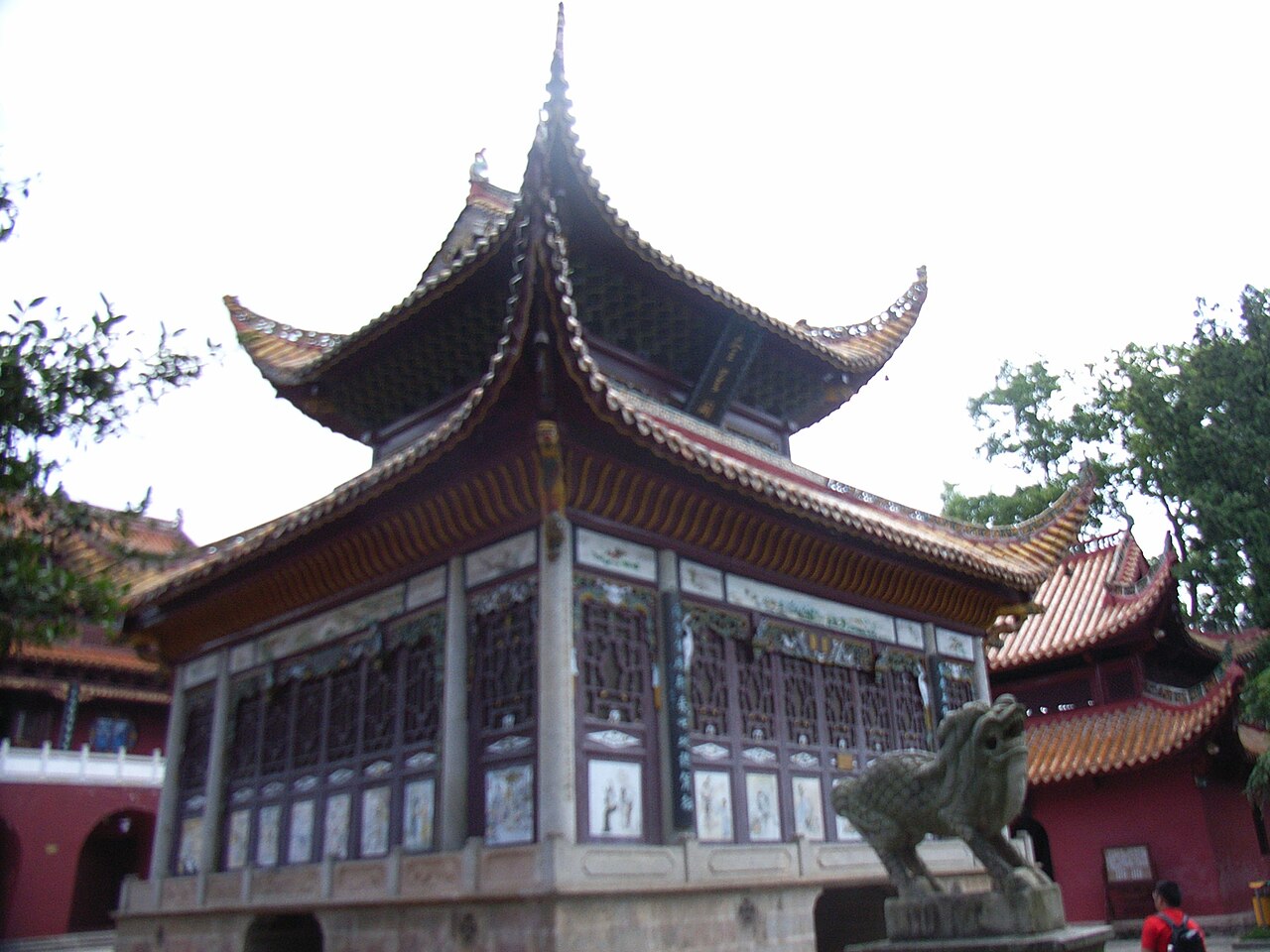
The Grand Temple of Mount Heng (Nanyue Damiao) stands at the foot of Mount Heng in Hunan, China, the largest temple complex on this sacred southern mountain and a long-standing centre of Taoist, Buddhist, and Confucian devotion.
temple
 Taoism
Louguantai
, People's Republic of China
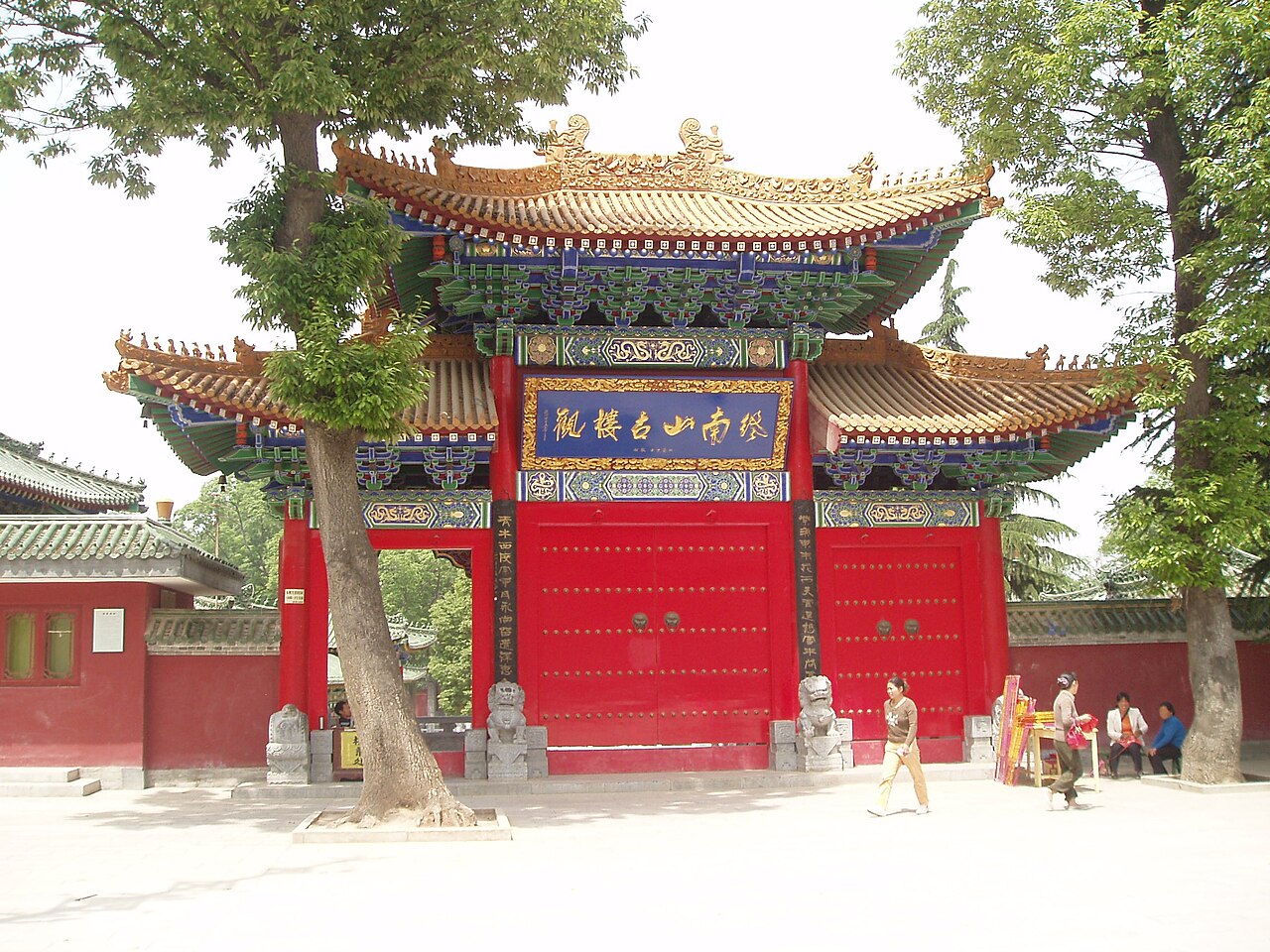
A Taoist temple in Tayu village in Zhouzhi county of Shaanxi province, China, traditionally honoured as the very place where Laozi composed the Tao Te Ching.
temple