
Taoism
Xuanmiao Temple
, People's Republic of China
About
Xuanmiao Temple — the 'Temple of Mystery' — stands at the centre of the historic walled city of Suzhou. The east–west street that passes before its gate is called Guanqian, today one of Suzhou's most celebrated pedestrian thoroughfares; a lane named Gong Xiang runs north–south to its very entrance.
The temple's history began in 276 CE, during the second year of the Xianning era of the Western Jin dynasty, when it was first established as Zhenqing Daoyuan. The precinct was destroyed in the wars of the Southern Song and rebuilt during the Chunxi reign-period of Emperor Xiaozong (1174–1189). It received the name Xuanmiao Guan in 1264. During the Qing dynasty's Kangxi reign, the temple was briefly renamed Yuanmiao Guan to observe the naming taboo around the emperor's personal name.
The first structure that meets the visitor is the Zheng Shan Men, an entirely wooden gateway oriented south-to-north with side entrances opening to the east and west. The original gate dates to the Tang dynasty; damaged in the eighteenth century, it was reconstructed in 1775.
The gate hall houses six statues of Taoist deities, alongside idols of four marshals and two generals. A tablet preserved at its flank commemorates the temple's restoration. Across the centuries Xuanmiao Temple has remained a working Taoist precinct at the spiritual centre of one of China's most enduring historic cities.
History
Xuanmiao Temple was founded in 276 CE, in the second year of the Western Jin Xianning era, under the name Zhenqing Daoyuan. After destruction during the Southern Song wars, it was rebuilt under Emperor Xiaozong in the Chunxi era, and given the present name of Xuanmiao Guan in 1264.
During the Qing dynasty's Kangxi reign, the precinct was briefly renamed Yuanmiao Guan to observe the naming taboo around the emperor's personal name. The Tang-dynasty wooden gate of the temple was reconstructed in 1775 after damage in the eighteenth century, and the wider precinct has been restored and maintained through successive generations of Taoist clergy and Suzhou residents.
Visiting
Hours
Hours not listed.
Contact
No contact details listed yet.
Engage with Xuanmiao Temple
Through the four pathways
Seva सेवा — Service
Offer your time and skills here. The following opportunities are open at Xuanmiao Temple:
No Seva offerings listed yet.
Sādhana साधना — Practice
Learn the worship and practice associated with Xuanmiao Temple:
No Sādhana offerings listed yet.
Sandhāna सन्धान — Wisdom
Unite with the wisdom of this tradition:
No Sandhāna offerings listed yet.
Sādhya साध्य — Giving
Support this sacred place according to your means:
No Sādhya offerings listed yet.
All giving flows directly to Xuanmiao Temple. Mandala does not take a commission.
Related sacred places
.jpg%2F1280px-11.27_%25E7%25B8%25BD%25E7%25B5%25B1%25E5%2587%25BA%25E5%25B8%25AD%25E3%2580%258C%25E9%25BE%258D%25E5%25B1%25B1%25E5%25AF%25BA%25E5%25BB%25BA%25E5%25AF%25BA280%25E5%2591%25A8%25E5%25B9%25B4%25E7%25B4%2580%25E5%25BF%25B5%25E3%2580%258D_(49131075286).jpg&w=3840&q=75) Taoism
TaoismBangka Lungshan Temple
, Taiwan
A historic Taiwanese folk temple in Taipei's Wanhua District, founded by Fujianese settlers in 1738 and dedicated above all to the bodhisattva Guanyin.
temple
.jpg%2F1280px-Cebu_Food_Trip_(11051398174).jpg&w=3840&q=75) Taoism
TaoismCebu Taoist Temple
, Philippines
A multi-tiered Taoist temple in the Beverly Hills district of Cebu City, the Philippines — built in 1972 by the local Chinese Filipino community as a centre of Dao worship.
temple
.jpg%2F1280px-Che_Kung_Temple_(Shatin%2C_Hong_Kong).jpg&w=3840&q=75) Taoism
TaoismChe Kung Miu
, People's Republic of China
A temple in Tai Wai, Sha Tin, Hong Kong, dedicated to Che Kung — a Southern Song dynasty general honoured as a protective deity in Chinese folk religion.
temple
_01.jpg%2F1280px-Chin_Swee_Caves_Temple_(230918)_01.jpg&w=3840&q=75) Taoism
TaoismChin Swee Caves Temple
, Malaysia
A Chinese temple set into the rocky highland forests of Genting, Pahang, Malaysia, dedicated to the Fujianese saint Master Qingshui and built over eighteen years by hand.
temple
 Taoism
Grand Temple of Mount Heng
, People's Republic of China
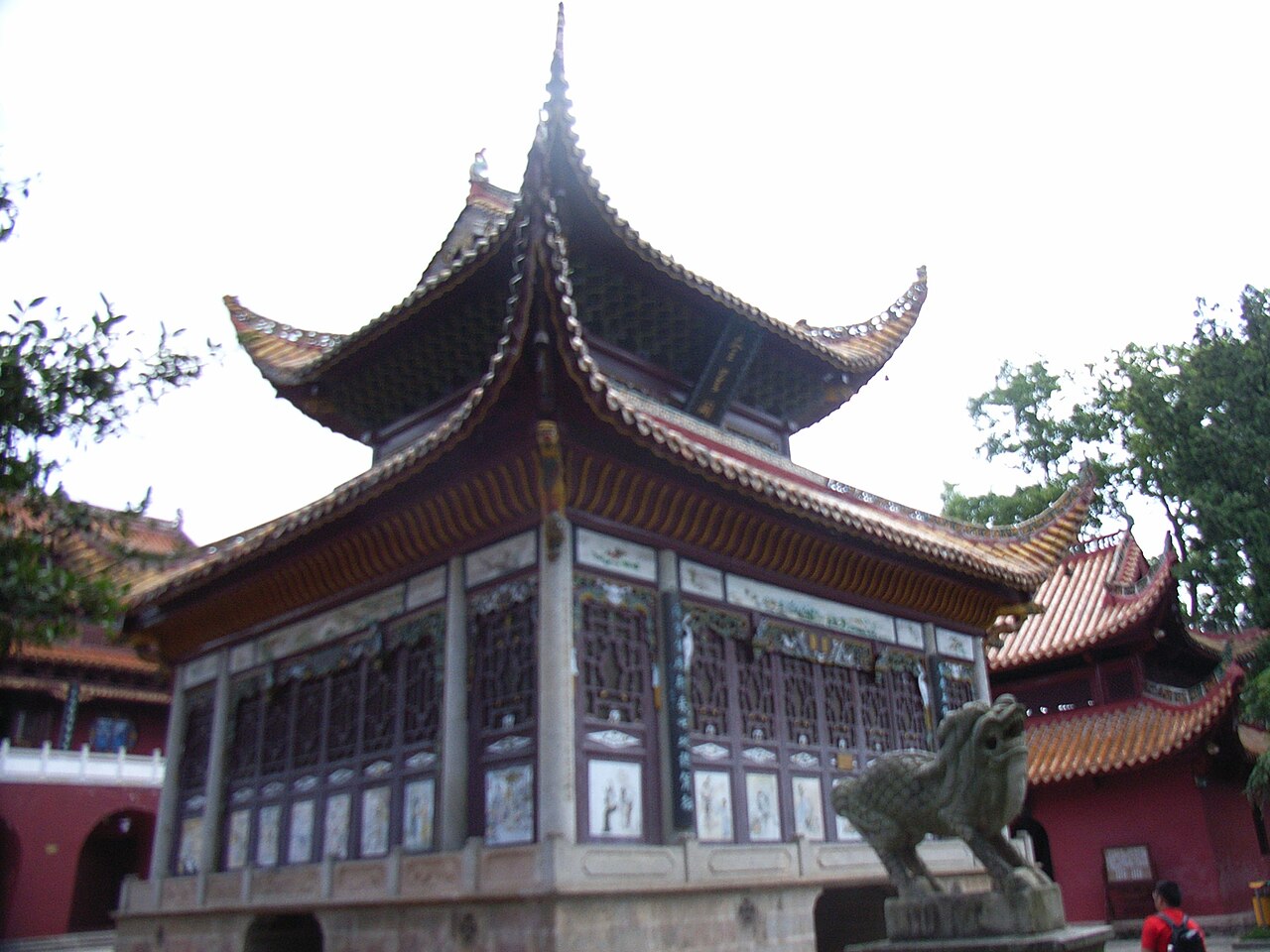
The Grand Temple of Mount Heng (Nanyue Damiao) stands at the foot of Mount Heng in Hunan, China, the largest temple complex on this sacred southern mountain and a long-standing centre of Taoist, Buddhist, and Confucian devotion.
temple
 Taoism
Louguantai
, People's Republic of China
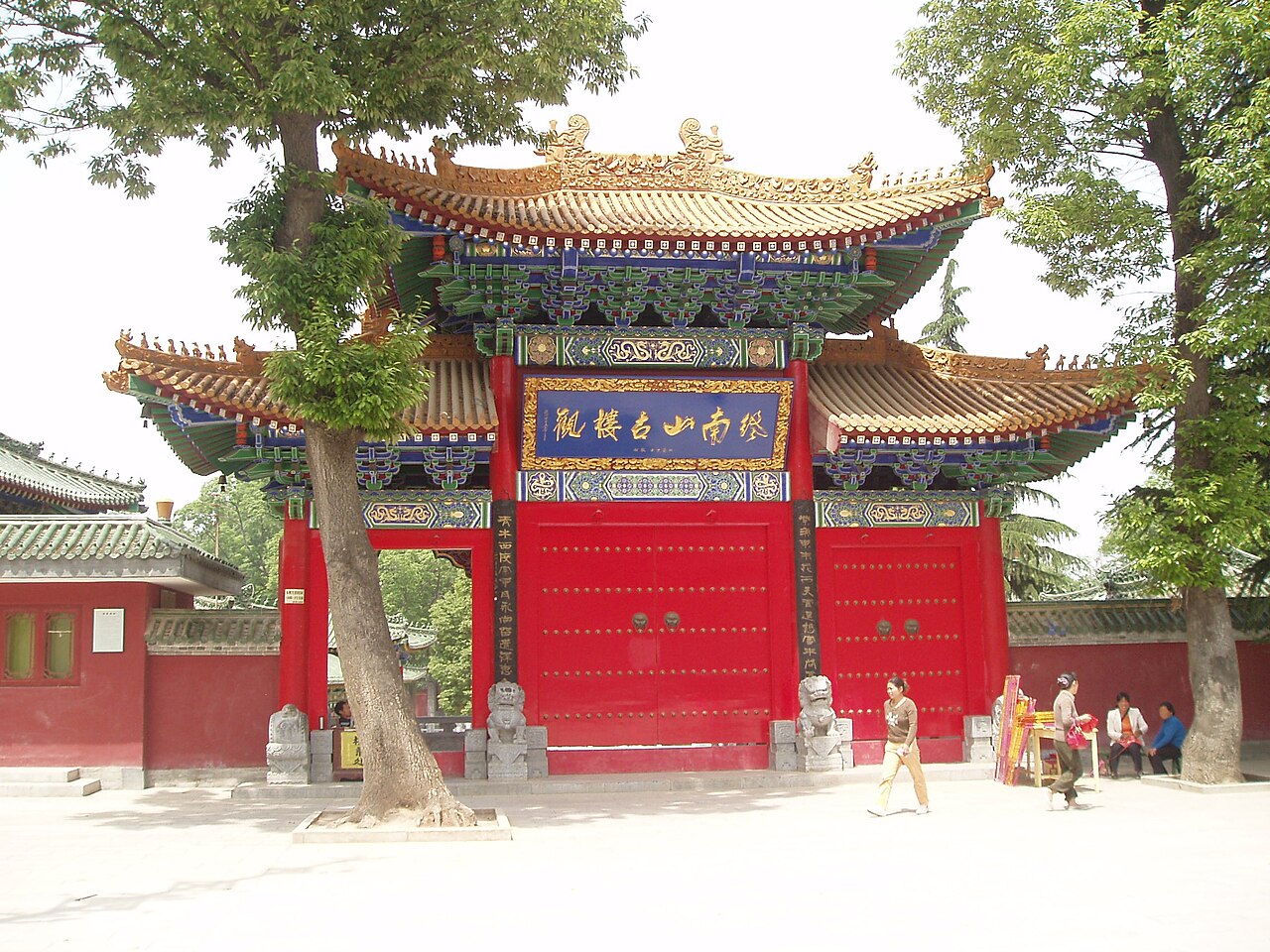
A Taoist temple in Tayu village in Zhouzhi county of Shaanxi province, China, traditionally honoured as the very place where Laozi composed the Tao Te Ching.
temple