
Taoism
Zhenwu Pavilion
, People's Republic of China
About
Zhenwu Pavilion stands in Rong County in Guangxi, southern China. Together with Yuejiang Tower, Xie Tiao Tower, and Zhenhai Tower it is counted among the Four Great Towers of Jiangnan, a grouping of historic towers that have long been regarded as masterworks of southern Chinese architectural tradition.
The earliest pavilion on the site reaches back to the eighth century, founded by Yuan Jie — a Tang-dynasty poet and official — during the years of that great cultural flowering. In 1377, near the beginning of the Ming dynasty, local officials raised a Taoist temple on the former site and named it Xuanwu Palace, after the celebrated Taoist deity Xuanwu, the dark warrior of the north.
The pavilion was enlarged in 1573 during the reign of the Wanli Emperor and renamed Zhenwu Pavilion, the name it has carried ever since. The renaming reflected the formal Ming-period substitution of 'Zhenwu' for the older 'Xuanwu' in deference to imperial naming conventions, while preserving the same Taoist deity at the heart of the precinct.
The building is a three-storey wooden structure with a gable-and-hip roof, of subtle proportion and quietly impressive scale. It rises some twenty metres high, is roughly fourteen metres wide and eleven metres deep, and preserves what is considered the largest and most magnificent timber hall surviving in Guangxi.
History
The earliest pavilion on this site dates to the eighth century under the Tang-dynasty poet and official Yuan Jie. In 1377, at the dawn of the Ming dynasty, local officials built a Taoist temple called Xuanwu Palace on the former foundation, dedicated to the deity Xuanwu. It was enlarged in 1573 during the reign of the Wanli Emperor and renamed Zhenwu Pavilion. The pavilion was listed in 1982 among the second batch of major national historical and cultural sites in Guangxi and was further recognised as a national AAAA-level scenic site in 2017.
Visiting
Hours
Hours not listed.
Contact
No contact details listed yet.
Engage with Zhenwu Pavilion
Through the four pathways
Seva सेवा — Service
Offer your time and skills here. The following opportunities are open at Zhenwu Pavilion:
No Seva offerings listed yet.
Sādhana साधना — Practice
Learn the worship and practice associated with Zhenwu Pavilion:
No Sādhana offerings listed yet.
Sandhāna सन्धान — Wisdom
Unite with the wisdom of this tradition:
No Sandhāna offerings listed yet.
Sādhya साध्य — Giving
Support this sacred place according to your means:
No Sādhya offerings listed yet.
All giving flows directly to Zhenwu Pavilion. Mandala does not take a commission.
Related sacred places
.jpg%2F1280px-11.27_%25E7%25B8%25BD%25E7%25B5%25B1%25E5%2587%25BA%25E5%25B8%25AD%25E3%2580%258C%25E9%25BE%258D%25E5%25B1%25B1%25E5%25AF%25BA%25E5%25BB%25BA%25E5%25AF%25BA280%25E5%2591%25A8%25E5%25B9%25B4%25E7%25B4%2580%25E5%25BF%25B5%25E3%2580%258D_(49131075286).jpg&w=3840&q=75) Taoism
TaoismBangka Lungshan Temple
, Taiwan
A historic Taiwanese folk temple in Taipei's Wanhua District, founded by Fujianese settlers in 1738 and dedicated above all to the bodhisattva Guanyin.
temple
.jpg%2F1280px-Cebu_Food_Trip_(11051398174).jpg&w=3840&q=75) Taoism
TaoismCebu Taoist Temple
, Philippines
A multi-tiered Taoist temple in the Beverly Hills district of Cebu City, the Philippines — built in 1972 by the local Chinese Filipino community as a centre of Dao worship.
temple
.jpg%2F1280px-Che_Kung_Temple_(Shatin%2C_Hong_Kong).jpg&w=3840&q=75) Taoism
TaoismChe Kung Miu
, People's Republic of China
A temple in Tai Wai, Sha Tin, Hong Kong, dedicated to Che Kung — a Southern Song dynasty general honoured as a protective deity in Chinese folk religion.
temple
_01.jpg%2F1280px-Chin_Swee_Caves_Temple_(230918)_01.jpg&w=3840&q=75) Taoism
TaoismChin Swee Caves Temple
, Malaysia
A Chinese temple set into the rocky highland forests of Genting, Pahang, Malaysia, dedicated to the Fujianese saint Master Qingshui and built over eighteen years by hand.
temple
 Taoism
Grand Temple of Mount Heng
, People's Republic of China
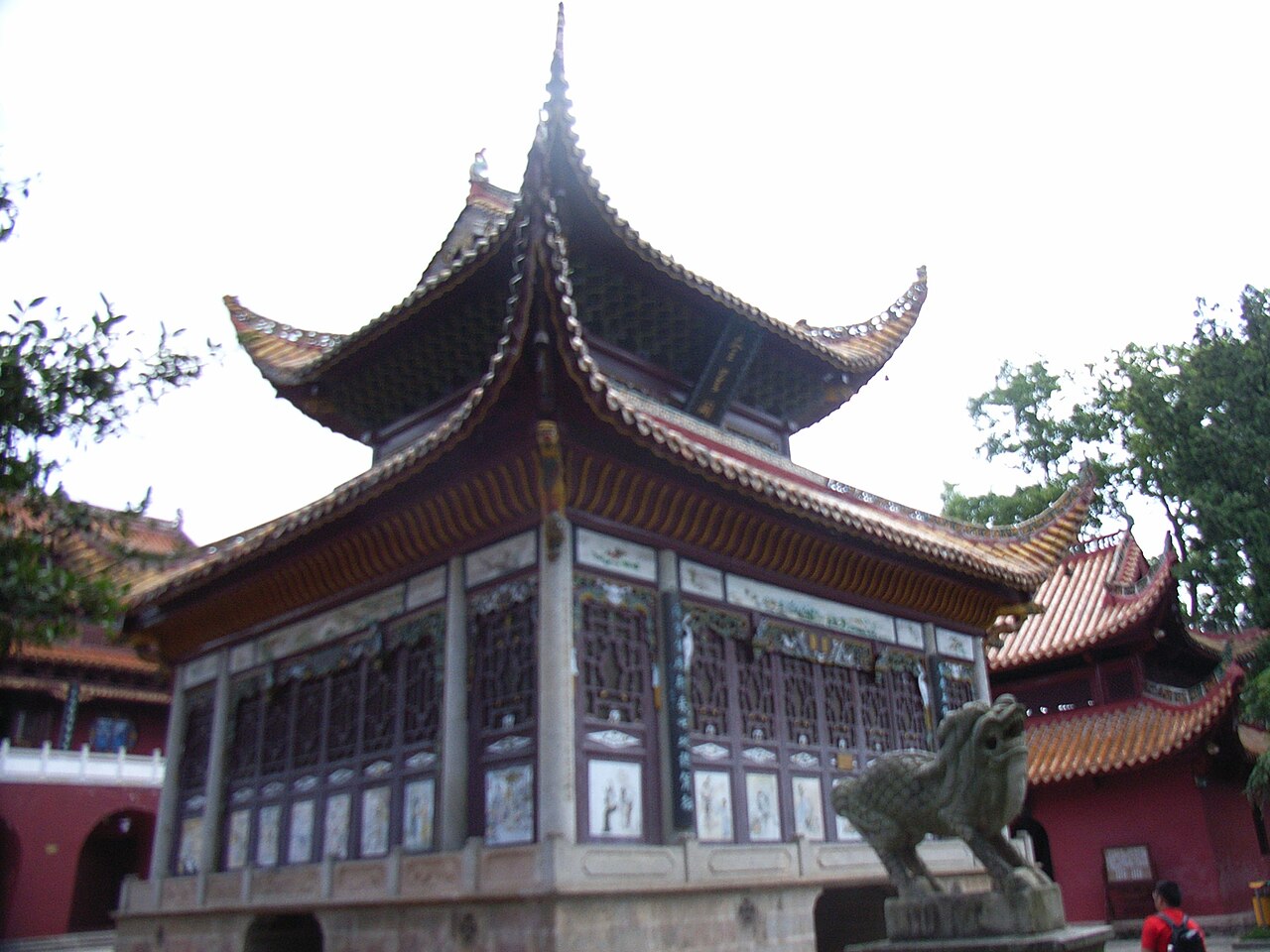
The Grand Temple of Mount Heng (Nanyue Damiao) stands at the foot of Mount Heng in Hunan, China, the largest temple complex on this sacred southern mountain and a long-standing centre of Taoist, Buddhist, and Confucian devotion.
temple
 Taoism
Louguantai
, People's Republic of China
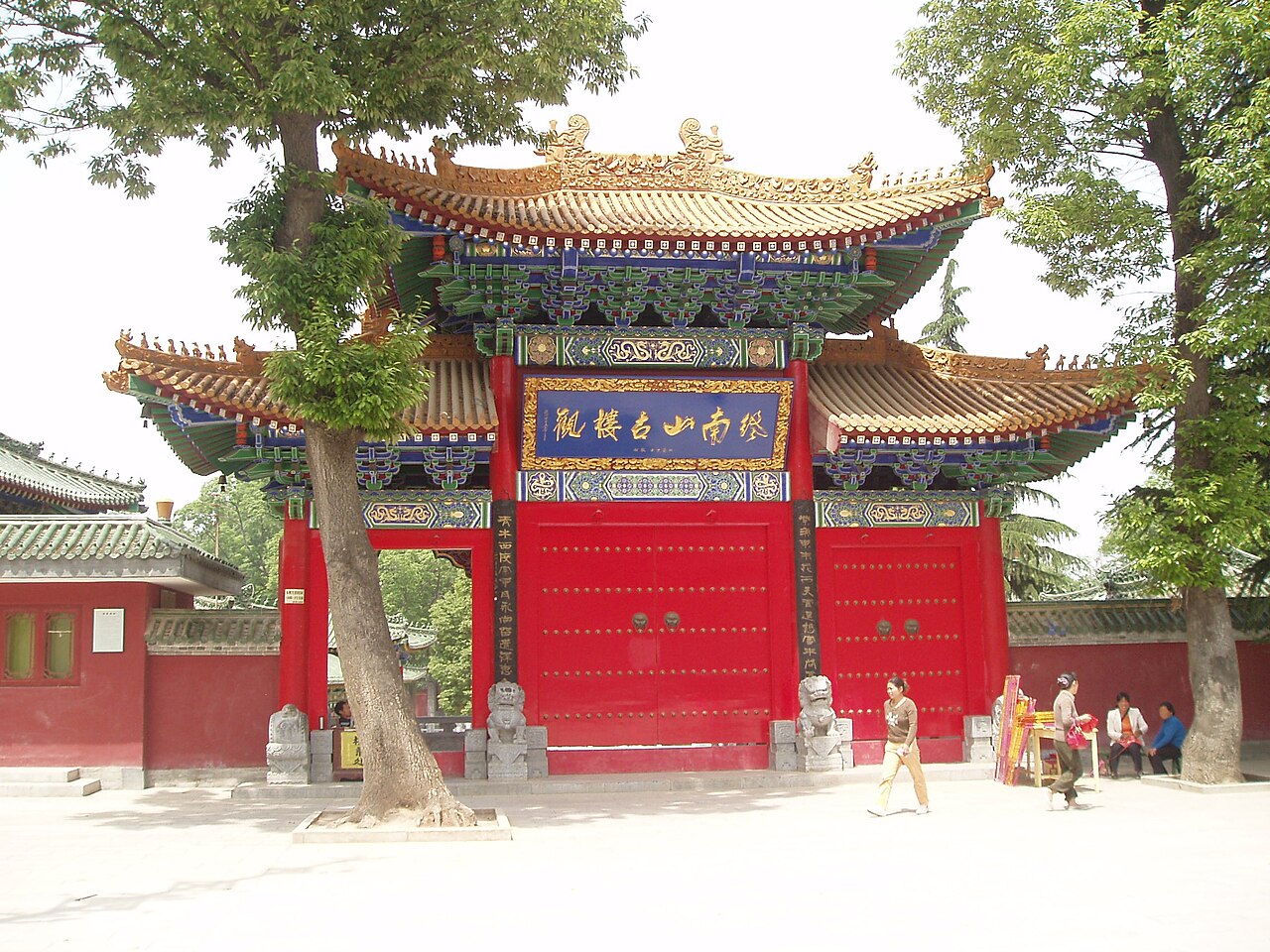
A Taoist temple in Tayu village in Zhouzhi county of Shaanxi province, China, traditionally honoured as the very place where Laozi composed the Tao Te Ching.
temple