
Christianity
Altamura Cathedral
, Italy
About
Altamura Cathedral — the Duomo di Altamura, properly the Cattedrale di Santa Maria Assunta — stands in the old hill town of Altamura, in the Metropolitan City of Bari in southern Italy's Apulia region. Dedicated to the Assumption of the Blessed Virgin Mary, it is one of the four 'palatine' churches of Apulia, built directly under imperial patronage rather than the ordinary jurisdiction of a local bishop.
The cathedral was raised between 1232 and 1254 by the will of the Holy Roman Emperor Frederick II. In 1248, at his urging, Pope Innocent IV declared Altamura exempt from the bishop of Bari, granting the church its distinctive palatine status. Since 1986 it has served as the seat of the Bishop of Altamura-Gravina-Acquaviva delle Fonti.
The building has been remade several times. The cathedral collapsed on 29 January 1316 and was rebuilt with the help of masons from nearby Bitonto, as a Latin inscription on the so-called Angevin Door records. The original orientation was reversed — main portal, rose window, and altar all shifted — either under Robert of Anjou in the early fourteenth century or during the enlargement of 1521–1547. The upper portions of the twin bell towers and the small loggia between them were added in the eighteenth century.
History
Construction of the cathedral was ordered by the Holy Roman Emperor Frederick II and carried out between 1232 and 1254. In 1248 it was granted palatine status by Pope Innocent IV. Earlier historians speculated that the site may have been previously occupied by a Greek or Roman temple — perhaps to Castor and Pollux, or to the two-faced god Janus — but restorations in the 2010s reidentified the supposed Janus head as the apotropaic image of a 'Saracen', reflecting Mediterranean Christian anxieties about coastal raids. The church collapsed in January 1316 and was rebuilt with skilled help from Bitonto. The orientation of the building was reversed during a later medieval or Renaissance reconstruction, and lightning struck the tower twice in 1726, causing major damage.
Visiting
Engage with Altamura Cathedral
Through the four pathways
Seva सेवा — Service
Offer your time and skills here. The following opportunities are open at Altamura Cathedral:
No Seva offerings listed yet.
Sādhana साधना — Practice
Learn the worship and practice associated with Altamura Cathedral:
No Sādhana offerings listed yet.
Sandhāna सन्धान — Wisdom
Unite with the wisdom of this tradition:
No Sandhāna offerings listed yet.
Sādhya साध्य — Giving
Support this sacred place according to your means:
No Sādhya offerings listed yet.
All giving flows directly to Altamura Cathedral. Mandala does not take a commission.
Related sacred places
 Christianity
Albenga Cathedral
, Italy
A medieval Roman Catholic cathedral in Liguria, Italy, dedicated to Saint Michael the Archangel and serving as seat of the Diocese of Albenga-Imperia.
church
 Christianity
Alexander Nevsky Cathedral
, Bulgaria
The Bulgarian Orthodox cathedral of Saint Alexander Nevsky in Sofia, a vast neo-Byzantine landmark and one of the largest Eastern Orthodox church buildings in the world.
church
_(5964742991).jpg%2F1280px-An_Auxiliary_Building_at_Bolnisi_Sioni_(I)_(5964742991).jpg&w=3840&q=75) Christianity
ChristianityBolnisi Sioni
, Georgia
A late-fifth-century Georgian Orthodox basilica in Bolnisi — the oldest surviving church building in Georgia, famed for its early Georgian-script inscriptions.
church
 Christianity
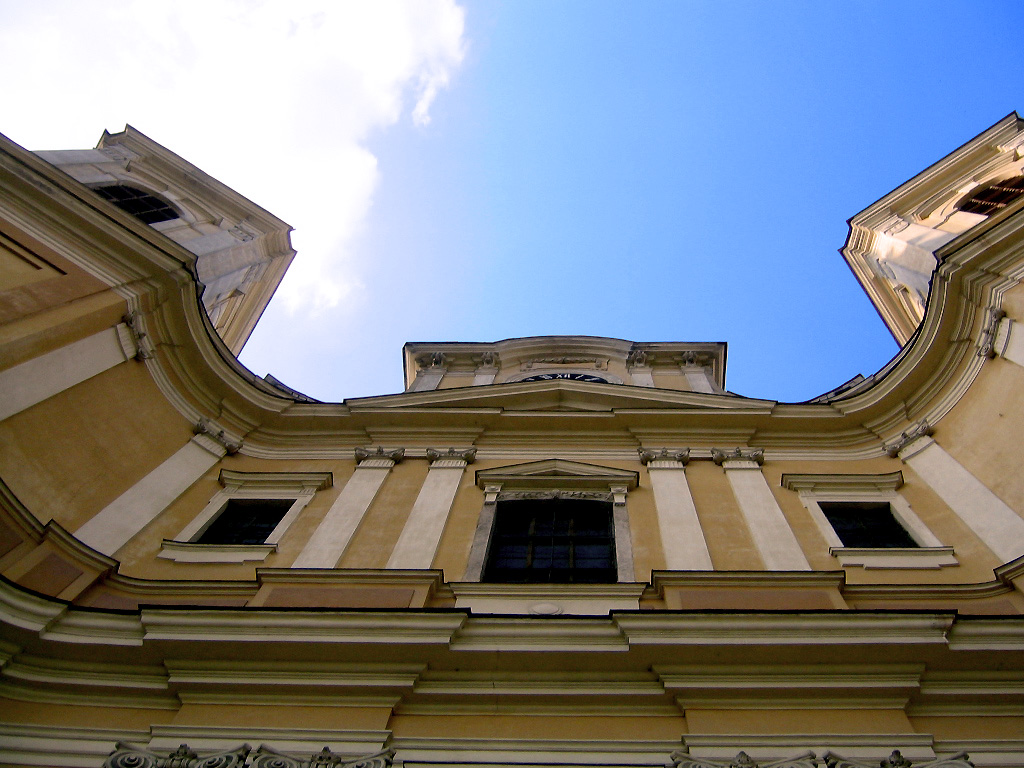
Cathedral Basilica of St. Mary
, Romania
A Roman Catholic cathedral basilica dedicated to the Blessed Virgin Mary — a name shared by several historic cathedral churches in Latin America and Europe.
church
 Christianity
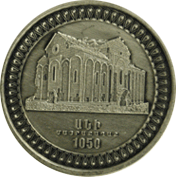
Cathedral of Ani
, Turkey
The eleventh-century Armenian Apostolic cathedral of the ruined Bagratid capital of Ani in eastern Turkey — the largest standing building of that lost medieval city.
church
 Christianity
Cathedral of Christ the Saviour
, Bosnia and Herzegovina
Moscow's great Russian Orthodox cathedral on the bank of the Moskva River — built, demolished under Soviet rule, and raised again in the 1990s as a memorial of national gratitude.
church