
Islam
Dome of the Rock
, Palestine
About
The Dome of the Rock (قبة الصخرة, Qubbat aṣ-Ṣaḫra) is an octagonal Islamic shrine at the heart of the Al-Aqsa precinct (Ḥaram al-Sharīf), atop the platform known in Jewish tradition as the Temple Mount, within Jerusalem's Old City. It is the oldest surviving work of Islamic architecture, the earliest archaeologically attested religious building raised under Muslim rule, and bears the earliest known inscriptions proclaiming Islam and the prophethood of Muhammad.
The shrine was begun under the Umayyad caliph ʿAbd al-Malik during the Second Fitna and completed in 691–692 CE. It rises over the Foundation Stone — al-Ṣakhra al-Musharrafa, the Noble Rock — which Muslim tradition associates with the Prophet Muhammad's Night Journey (Isrāʾ wa Miʿrāj). For Jews the same stone is the Even ha-Shtiyya, traditionally the place from which the world was founded, the site of the binding of Isaac (also recalled by Christians), and the location of the Second Jewish Temple destroyed by the Romans in 70 CE; toward this place Jews continue to direct their prayer.
Its architecture and mosaics draw on the late-antique Byzantine world. Its outer dress has been remade across centuries — most famously with the blue-and-white Iznik-style tile cladding of the early Ottoman period, and in modern times with the gold-plated covering of the dome (1959–61, renewed in 1993). The shrine is inscribed within the Old City of Jerusalem UNESCO World Heritage Site.
History
Construction was ordered by the Umayyad caliph ʿAbd al-Malik ibn Marwān in 691–692 CE, in the years of the Second Fitna. Its inscriptions — proclaiming the oneness of God and the prophethood of Muhammad — became a model for monumental Islamic epigraphy thereafter. The dome collapsed in 1015 and was rebuilt by 1022–23. Major Ottoman refurbishments added the Iznik-style tile sheath, and the now-iconic gold cladding of the dome was installed in 1959–61 and renewed in 1993. The site has been part of intense religious memory and contemporary contestation; this listing reflects the building as a sacred place in the Islamic tradition while also acknowledging the layered Jewish and Christian heritage of the rock at its centre.
Significance
For Muslims, the Dome of the Rock marks the holy precinct from which the Prophet Muhammad is believed to have ascended through the heavens during the Isrāʾ wa Miʿrāj. Together with the Western Wall and the Resurrection Rotunda of the Church of the Holy Sepulchre, it forms part of the most recognised — and most layered — sacred landscape in the world.
Visiting
Engage with Dome of the Rock
Through the four pathways
Seva सेवा — Service
Offer your time and skills here. The following opportunities are open at Dome of the Rock:
No Seva offerings listed yet.
Sādhana साधना — Practice
Learn the worship and practice associated with Dome of the Rock:
No Sādhana offerings listed yet.
Sandhāna सन्धान — Wisdom
Unite with the wisdom of this tradition:
No Sandhāna offerings listed yet.
Sādhya साध्य — Giving
Support this sacred place according to your means:
No Sādhya offerings listed yet.
All giving flows directly to Dome of the Rock. Mandala does not take a commission.
Related sacred places
 Islam
IslamAbu'l-Fida Mosque
, Syria
A medieval Sunni mosque and mausoleum complex on the banks of the Orontes River in Hama, Syria, where Ayyubid and Mamluk craftsmanship meet within a single walled sacred precinct.
mosque
_(14593689400).jpg%2F1280px-By_Nile_and_Tigris_-_a_narrative_of_Journeys_in_Egypt_and_Mesopotamia_on_behalf_of_the_British_Museum_between_the_years_1886_and_1913_(1920)_(14593689400).jpg&w=3840&q=75) Islam
IslamAl-Kadhimiya Mosque
, Iraq
One of the foremost Twelver Shia shrines, set in the Kāẓimiya district of Baghdad, Iraq, sheltering the tombs of the seventh and ninth Imams as well as great Shia scholars of the medieval era.
mosque
 Islam
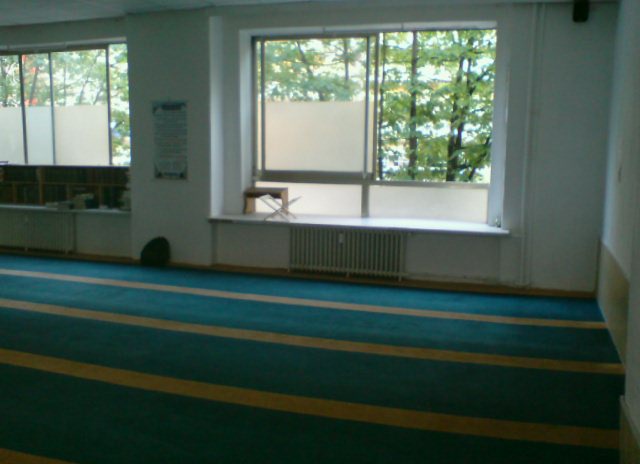
IslamAl-Quds Mosque Hamburg
, Germany
A former Sunni Muslim mosque in the German port city of Hamburg, which served local worshippers from 1993 until its closure was ordered by German security authorities in 2010.
mosque
 Islam
IslamBasharat Mosque
, Spain
The principal Ahmadiyya mosque of Spain, built at Pedro Abad near Córdoba and inaugurated in 1982 as the centre of the Ahmadiyya community in the country.
mosque
.jpg%2F1280px-Bayezid_I_Mosque_-_Y%25C4%25B1ld%25C4%25B1r%25C4%25B1m_Camii_(1).jpg&w=3840&q=75) Islam
IslamBayezid I Mosque
, Turkey
An early Ottoman congregational mosque in Bursa, Turkey, raised between 1391 and 1395 as the centrepiece of the great külliye complex of Sultan Bayezid I, called 'Yıldırım' — the Thunderbolt.
mosque
 Islam
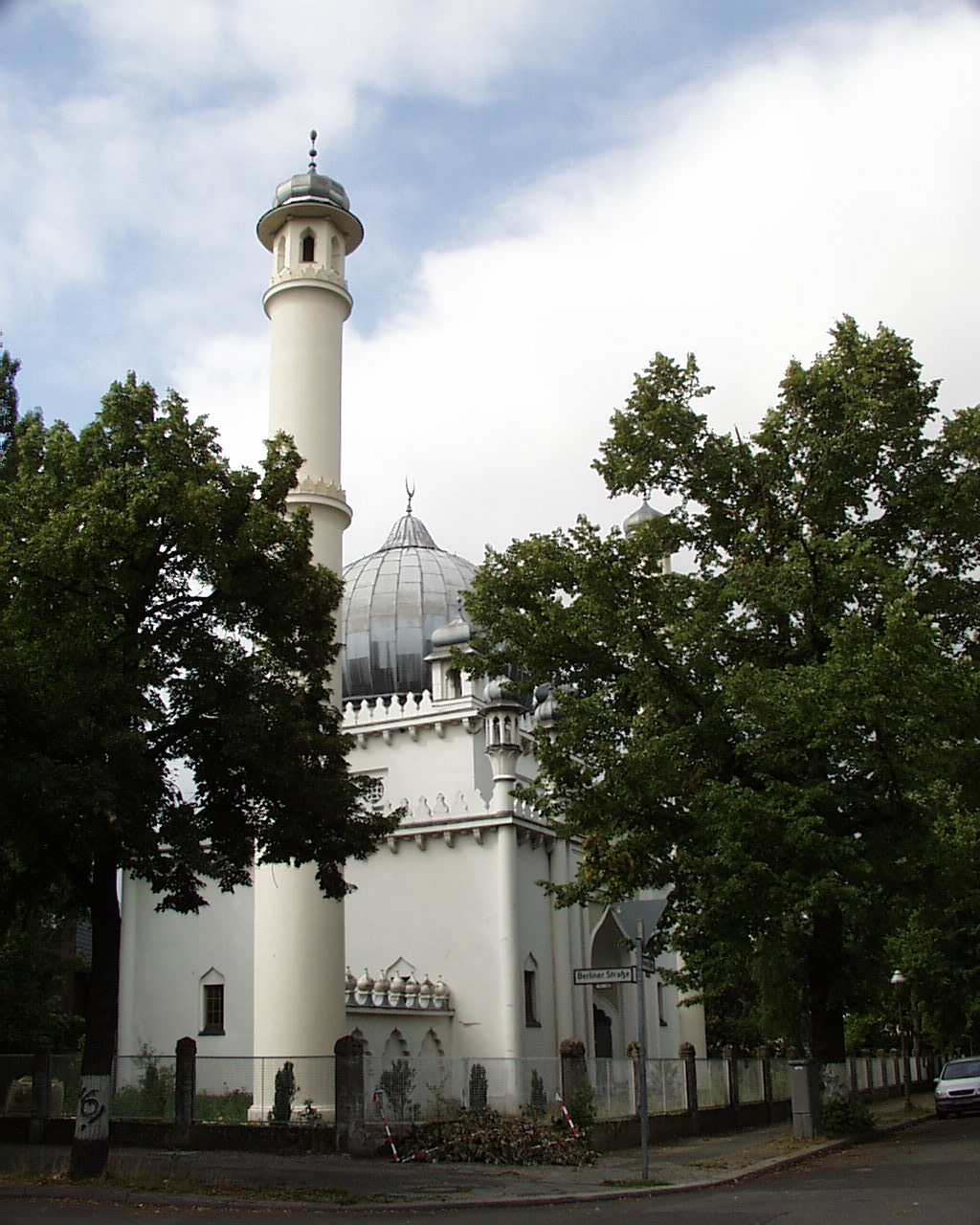
IslamBerlin Mosque
, Germany
The oldest surviving mosque in Germany, built in Berlin's Wilmersdorf district in the 1920s in a Neo-Mughal style and administered by the Lahore Ahmadiyya Movement.
mosque