
Islam
Jama Masjid, Delhi
, India
About
Rising on the highest ground of old Shahjahanabad, the mosque commands the surrounding city with its broad red sandstone and white marble facade, its three bulbous domes, and its twin minarets of striped sandstone and marble. The vast courtyard, reached by a sweep of steps from each of three sides, can hold tens of thousands of worshippers in congregational prayer.
Its older name, Masjid-i-Jehan-Numa, was the title given by the emperor Shah Jahan and is generally read as the mosque that reflects the whole world, an allusion to the legendary Jam-e-Jehan Numa, the mirror that showed all things. The everyday Urdu name, Jama Masjid, is shared with congregational mosques throughout the Muslim world, drawn from the Arabic for the gathering or Friday mosque.
The Red Fort lies just across the open ground from the mosque, with Chandni Chowk and the bazaars of the old city stretching westwards. The mausoleum of Maulana Abul Kalam Azad, the Indian independence leader and scholar, stands beside the mosque, weaving its history together with that of modern India.
The Jama Masjid remains in daily use as a congregational mosque, with the five daily prayers and the Friday jumu'ah observed within its courts. It is a Monument of National Importance under the Archaeological Survey of India.
History
Shah Jahan commissioned the mosque as one of the closing monumental projects of his reign. Construction took place between 1650 and 1656, employing approximately five thousand workers. The works were supervised by the wazir Sadullah Khan and by Fazil Khan, at a recorded cost of ten lakh rupees.
On 23 July 1656 the mosque was opened by Syed Abdul Ghafoor Shah Bukhari, whom Shah Jahan had brought from Bukhara to serve as the first Shahi Imam. Until 1857, the Friday khutba was recited here in the name of the reigning Mughal sovereign, marking the mosque as a sign of imperial legitimacy.
Following the 1857 Revolt, the British seized the mosque and used parts of it as a barracks, returning it to the Muslim community in 1862 under conditions of strictly religious use. The Jama Masjid Managing Committee was established, and the imamate has continued in the Bukhari family across generations.
Significance
The Jama Masjid is among the most cherished places of worship for Muslims of India, a working congregational mosque whose Friday prayers gather thousands beneath its domes. As the imperial mosque of the Mughal capital, it stands as a witness to the long Islamic presence in Delhi, and as a place where the rhythm of daily salah continues at the heart of Old Delhi.
Visiting
Engage with Jama Masjid, Delhi
Through the four pathways
Seva सेवा — Service
Offer your time and skills here. The following opportunities are open at Jama Masjid, Delhi:
No Seva offerings listed yet.
Sādhana साधना — Practice
Learn the worship and practice associated with Jama Masjid, Delhi:
No Sādhana offerings listed yet.
Sandhāna सन्धान — Wisdom
Unite with the wisdom of this tradition:
No Sandhāna offerings listed yet.
Sādhya साध्य — Giving
Support this sacred place according to your means:
No Sādhya offerings listed yet.
All giving flows directly to Jama Masjid, Delhi. Mandala does not take a commission.
Related sacred places
 Islam
IslamAbu'l-Fida Mosque
, Syria
A medieval Sunni mosque and mausoleum complex on the banks of the Orontes River in Hama, Syria, where Ayyubid and Mamluk craftsmanship meet within a single walled sacred precinct.
mosque
_(14593689400).jpg%2F1280px-By_Nile_and_Tigris_-_a_narrative_of_Journeys_in_Egypt_and_Mesopotamia_on_behalf_of_the_British_Museum_between_the_years_1886_and_1913_(1920)_(14593689400).jpg&w=3840&q=75) Islam
IslamAl-Kadhimiya Mosque
, Iraq
One of the foremost Twelver Shia shrines, set in the Kāẓimiya district of Baghdad, Iraq, sheltering the tombs of the seventh and ninth Imams as well as great Shia scholars of the medieval era.
mosque
 Islam
IslamAl-Quds Mosque Hamburg
, Germany
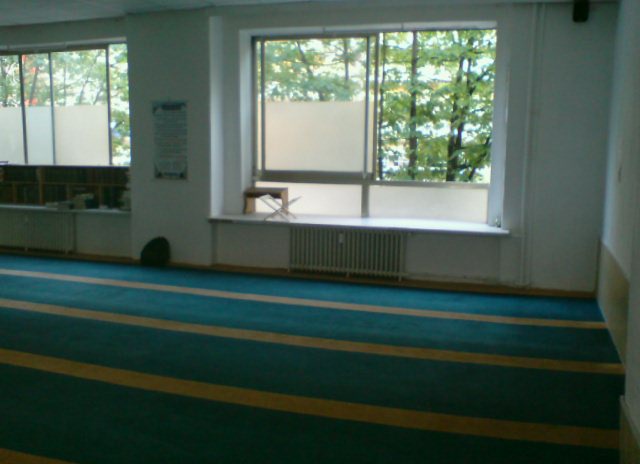
A former Sunni Muslim mosque in the German port city of Hamburg, which served local worshippers from 1993 until its closure was ordered by German security authorities in 2010.
mosque
 Islam
IslamBasharat Mosque
, Spain
The principal Ahmadiyya mosque of Spain, built at Pedro Abad near Córdoba and inaugurated in 1982 as the centre of the Ahmadiyya community in the country.
mosque
.jpg%2F1280px-Bayezid_I_Mosque_-_Y%25C4%25B1ld%25C4%25B1r%25C4%25B1m_Camii_(1).jpg&w=3840&q=75) Islam
IslamBayezid I Mosque
, Turkey
An early Ottoman congregational mosque in Bursa, Turkey, raised between 1391 and 1395 as the centrepiece of the great külliye complex of Sultan Bayezid I, called 'Yıldırım' — the Thunderbolt.
mosque
 Islam
IslamBerlin Mosque
, Germany
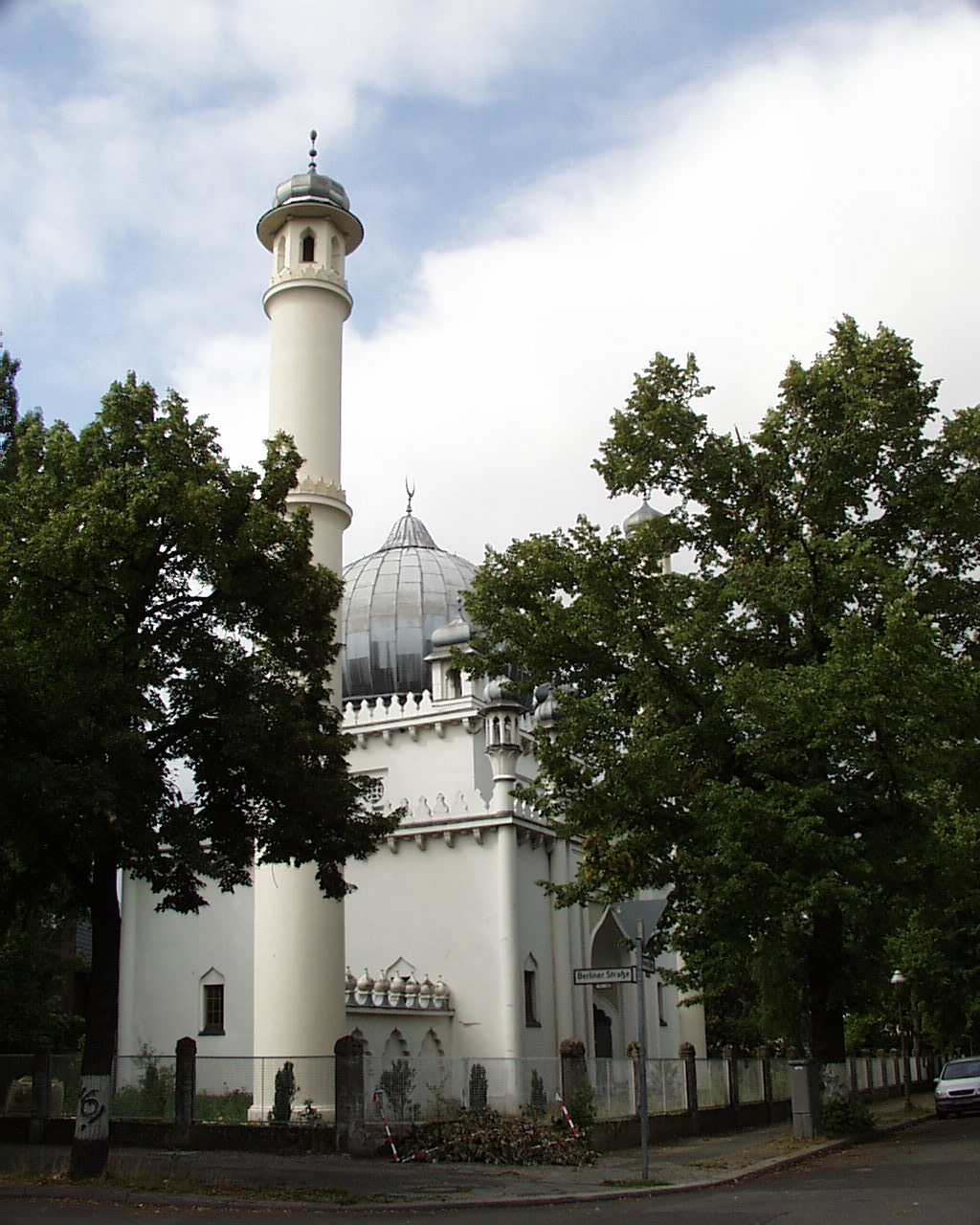
The oldest surviving mosque in Germany, built in Berlin's Wilmersdorf district in the 1920s in a Neo-Mughal style and administered by the Lahore Ahmadiyya Movement.
mosque