
Islam
Jameh Mosque of Qazvin
, Iran
About
Set at the heart of the old quarters of Qazvin, the Jameh Mosque has been the principal Friday gathering place for Muslims of the city for more than twelve centuries. Layers of construction from successive eras stand side by side here: an Abbasid core, a Seljuk dome over the south iwan, and Safavid additions on the northern and eastern sides of the great courtyard.
The oldest portion is traditionally said to have been raised by command of the Abbasid caliph Harun al-Rashid in 807 CE, on the foundations of an earlier Zoroastrian fire temple. Successive additions across the centuries have left the mosque a record in stone and tile of Iranian Islamic architecture, with its double-shelled Seljuk dome holding fine relief calligraphy from the medieval period.
Despite the devastation of the Mongol invasions, which destroyed much of medieval Qazvin, the mosque endured. Portions of the complex have since served as a public library, and the mosque preserves a traditional shabestan, a covered winter prayer hall, and an ab anbar, an old underground water cistern, both protected under the national cultural heritage of Iran.
The mosque was added to the Iran National Heritage List in 1932 and is administered by the Cultural Heritage, Handicrafts and Tourism Organization of Iran. A fire in January 2013 damaged part of the complex, which has since been undergoing careful restoration to preserve its many layered histories.
Significance
As one of the oldest surviving mosques in Iran and one of the principal Shia Friday mosques of Qazvin, the Jameh Mosque carries the memory of Islamic worship in this city across more than twelve hundred years. Its quiet weaving of pre-Islamic foundations and Islamic devotion offers a tangible witness to the continuity of sacred space in the Iranian plateau.
Visiting
Engage with Jameh Mosque of Qazvin
Through the four pathways
Seva सेवा — Service
Offer your time and skills here. The following opportunities are open at Jameh Mosque of Qazvin:
No Seva offerings listed yet.
Sādhana साधना — Practice
Learn the worship and practice associated with Jameh Mosque of Qazvin:
No Sādhana offerings listed yet.
Sandhāna सन्धान — Wisdom
Unite with the wisdom of this tradition:
No Sandhāna offerings listed yet.
Sādhya साध्य — Giving
Support this sacred place according to your means:
No Sādhya offerings listed yet.
All giving flows directly to Jameh Mosque of Qazvin. Mandala does not take a commission.
Gallery
Related sacred places
 Islam
IslamAbu'l-Fida Mosque
, Syria
A medieval Sunni mosque and mausoleum complex on the banks of the Orontes River in Hama, Syria, where Ayyubid and Mamluk craftsmanship meet within a single walled sacred precinct.
mosque
_(14593689400).jpg%2F1280px-By_Nile_and_Tigris_-_a_narrative_of_Journeys_in_Egypt_and_Mesopotamia_on_behalf_of_the_British_Museum_between_the_years_1886_and_1913_(1920)_(14593689400).jpg&w=3840&q=75) Islam
IslamAl-Kadhimiya Mosque
, Iraq
One of the foremost Twelver Shia shrines, set in the Kāẓimiya district of Baghdad, Iraq, sheltering the tombs of the seventh and ninth Imams as well as great Shia scholars of the medieval era.
mosque
 Islam
IslamAl-Quds Mosque Hamburg
, Germany
A former Sunni Muslim mosque in the German port city of Hamburg, which served local worshippers from 1993 until its closure was ordered by German security authorities in 2010.
mosque
 Islam
IslamBasharat Mosque
, Spain
The principal Ahmadiyya mosque of Spain, built at Pedro Abad near Córdoba and inaugurated in 1982 as the centre of the Ahmadiyya community in the country.
mosque
.jpg%2F1280px-Bayezid_I_Mosque_-_Y%25C4%25B1ld%25C4%25B1r%25C4%25B1m_Camii_(1).jpg&w=3840&q=75) Islam
IslamBayezid I Mosque
, Turkey
An early Ottoman congregational mosque in Bursa, Turkey, raised between 1391 and 1395 as the centrepiece of the great külliye complex of Sultan Bayezid I, called 'Yıldırım' — the Thunderbolt.
mosque
 Islam
IslamBerlin Mosque
, Germany
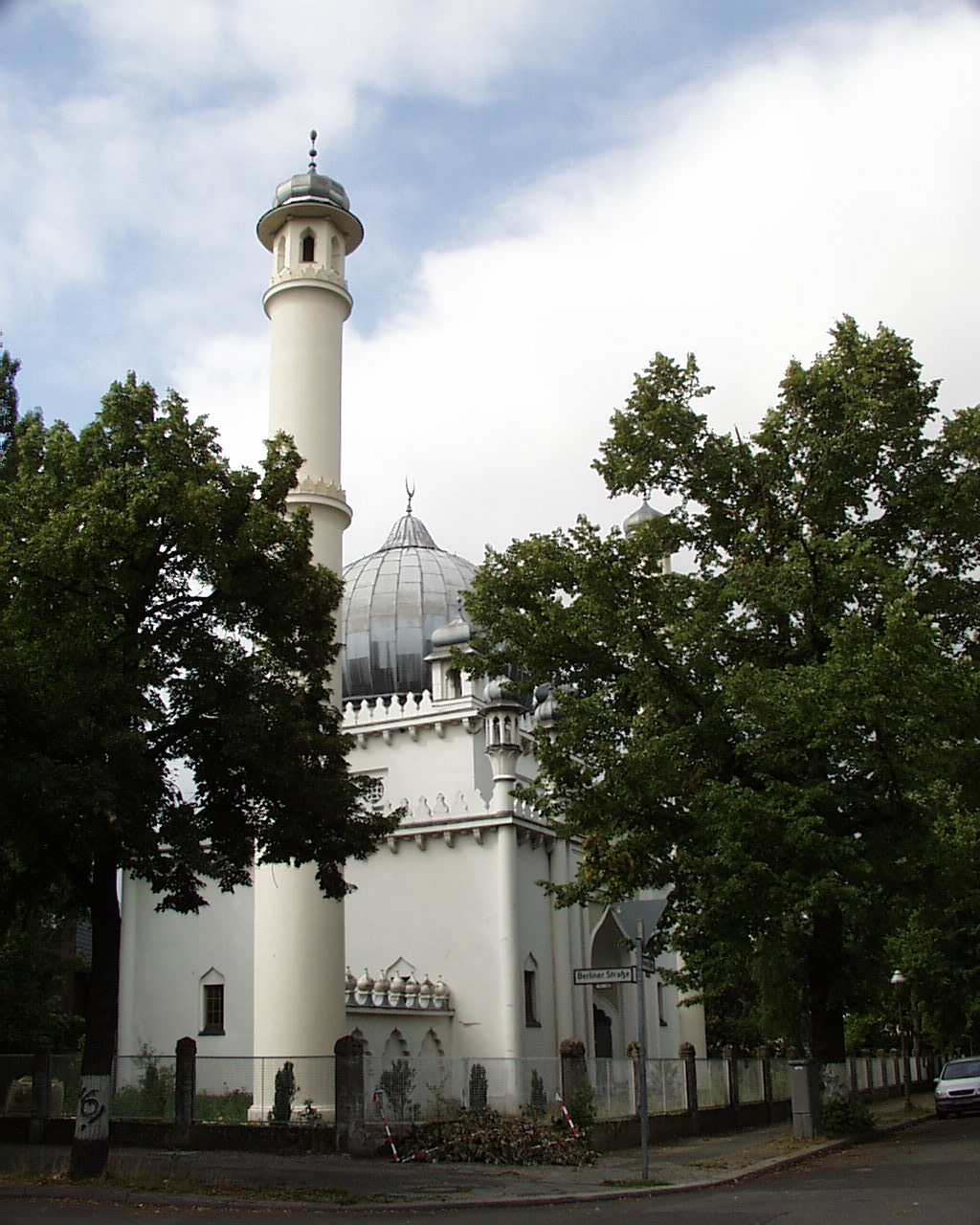
The oldest surviving mosque in Germany, built in Berlin's Wilmersdorf district in the 1920s in a Neo-Mughal style and administered by the Lahore Ahmadiyya Movement.
mosque