_Monastery_of_the_Pantokrator.jpg%2F1280px-2014_Zeyrek_Mosque_(1)_Monastery_of_the_Pantokrator.jpg&w=3840&q=75)
Islam
Zeyrek Mosque
, Turkey
About
Zeyrek Mosque — Zeyrek Camii — rises on Fazilet Street in the Zeyrek district of Fatih in Istanbul, looking out over the Golden Horn. The building was originally the great Monastery of Christ Pantokrator, a Byzantine complex made up of two churches and a chapel joined together. It remains the finest example of Middle Byzantine architecture surviving in Constantinople and, after Hagia Sophia, the largest Byzantine religious edifice still standing in Istanbul.
Between 1118 and 1124, the Empress Irene of Hungary founded a monastery dedicated to Christ Pantokrator on this site, with a library and hospital. After Irene's death, John II built a second church to the north, dedicated to the Theotokos Eleousa, which was open to the laity.
A chapel of Saint Michael joined the two churches by around 1136, becoming the imperial mausoleum of the Komnenos and Palaiologos dynasties. During the Latin occupation after 1204, the precinct was used by the last Latin emperor Baldwin as a palace. After the Palaiologan restoration, Orthodox monks returned; the future first Patriarch of Constantinople, Gennadius II Scholarius, lived here before 1453.
Following the Ottoman conquest, the principal church was converted into a mosque. The mosque takes its present name from Molla Zeyrek, a scholar who taught there. After long neglect the building was added to UNESCO's watchlist of endangered monuments, and an extensive restoration has since been completed.
History
The Monastery of the Pantokrator was founded between 1118 and 1124 by the Empress Irene of Hungary, the wife of John II Komnenos, dedicated to Christ Pantokrator. After Irene's death, John II added a second church dedicated to the Theotokos Eleousa, and by around 1136 a chapel of Saint Michael joined the two — serving as imperial mausoleum to the Komnenos and Palaiologos dynasties.
After the Fourth Crusade of 1204 the complex passed to Venetian clergy and was used as an imperial palace by the Latin emperor Baldwin. With the restoration of Byzantine rule it returned to Orthodox monks until the Fall of Constantinople in 1453, when the principal church was converted into a mosque. The Ottomans named it for the scholar Molla Zeyrek. A major restoration in the early twenty-first century has stabilised the building and restored it to active use for prayer.
Visiting
Engage with Zeyrek Mosque
Through the four pathways
Seva सेवा — Service
Offer your time and skills here. The following opportunities are open at Zeyrek Mosque:
No Seva offerings listed yet.
Sādhana साधना — Practice
Learn the worship and practice associated with Zeyrek Mosque:
No Sādhana offerings listed yet.
Sandhāna सन्धान — Wisdom
Unite with the wisdom of this tradition:
No Sandhāna offerings listed yet.
Sādhya साध्य — Giving
Support this sacred place according to your means:
No Sādhya offerings listed yet.
All giving flows directly to Zeyrek Mosque. Mandala does not take a commission.
Related sacred places
 Islam
IslamAbu'l-Fida Mosque
, Syria
A medieval Sunni mosque and mausoleum complex on the banks of the Orontes River in Hama, Syria, where Ayyubid and Mamluk craftsmanship meet within a single walled sacred precinct.
mosque
_(14593689400).jpg%2F1280px-By_Nile_and_Tigris_-_a_narrative_of_Journeys_in_Egypt_and_Mesopotamia_on_behalf_of_the_British_Museum_between_the_years_1886_and_1913_(1920)_(14593689400).jpg&w=3840&q=75) Islam
IslamAl-Kadhimiya Mosque
, Iraq
One of the foremost Twelver Shia shrines, set in the Kāẓimiya district of Baghdad, Iraq, sheltering the tombs of the seventh and ninth Imams as well as great Shia scholars of the medieval era.
mosque
 Islam
IslamAl-Quds Mosque Hamburg
, Germany
A former Sunni Muslim mosque in the German port city of Hamburg, which served local worshippers from 1993 until its closure was ordered by German security authorities in 2010.
mosque
 Islam
IslamBasharat Mosque
, Spain
The principal Ahmadiyya mosque of Spain, built at Pedro Abad near Córdoba and inaugurated in 1982 as the centre of the Ahmadiyya community in the country.
mosque
.jpg%2F1280px-Bayezid_I_Mosque_-_Y%25C4%25B1ld%25C4%25B1r%25C4%25B1m_Camii_(1).jpg&w=3840&q=75) Islam
IslamBayezid I Mosque
, Turkey
An early Ottoman congregational mosque in Bursa, Turkey, raised between 1391 and 1395 as the centrepiece of the great külliye complex of Sultan Bayezid I, called 'Yıldırım' — the Thunderbolt.
mosque
 Islam
IslamBerlin Mosque
, Germany
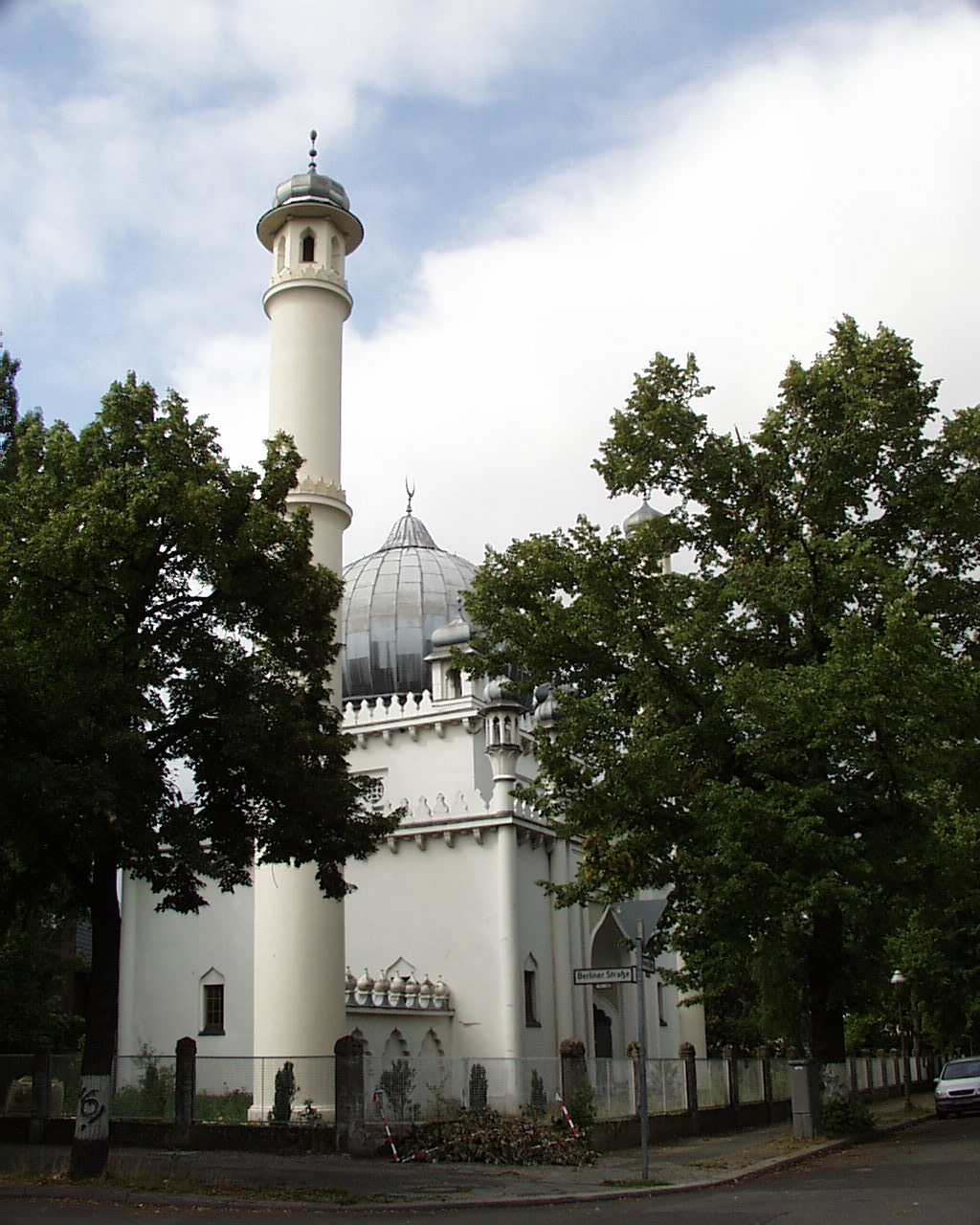
The oldest surviving mosque in Germany, built in Berlin's Wilmersdorf district in the 1920s in a Neo-Mughal style and administered by the Lahore Ahmadiyya Movement.
mosque